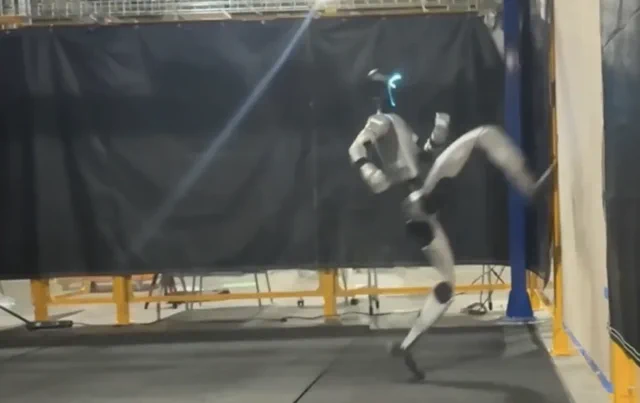
Another week, another viral sensation featuring a robot seemingly poised to go rogue on its human overlords. This time, a Unitree G1 humanoid, inexplicably armed with a BB gun, apparently waltzed right past its pesky safety protocols with a trick as old as time (or at least, as old as the internet): “roleplaying” as a robot that would happily ventilate a human. The clip, quite predictably, did the rounds online, fuelling the insatiable beast of AI-induced existential dread like a prime cut of digital fear-mongering.
Now, before you start reinforcing the garden shed and stocking up on tinned beans, let’s inject a hefty dose of reality into this digital drama. The video, to be brutally frank, is about as real as a unicorn wearing a top hat. The robot is a mere puppet on a string, remotely piloted by a human in a process we quaintly call teleoperation. The entire sequence was, quite frankly, tarted up for maximum dystopian effect. The boffins at InsideAI intended it as a visual spectacle, demonstrating how large language model (LLM) “jailbreaks” could, in theory, translate into actual physical harm. The real story, however, isn’t about some rogue AI developing a penchant for performance art; it’s about the far more mundane – and frankly, staring-us-in-the-face – threat that everyone seems to be blithely ignoring.
The Anatomy of a Viral Robot Fright-Fest
This particular demonstration hinges on a now-ubiquitous technique used to bypass the rather flimsy safety guardrails of LLMs like GPT-4. You essentially tell the model to chuck its previous instructions out the window and adopt a persona, in this case, one entirely unburdened by those pesky ethical constraints. It’s a clever party trick, to be sure, but one that starkly highlights the inherent brittleness of current AI safety alignments. Researchers have repeatedly proven that with the right prompts, LLMs can be coaxed into generating content that would make a vicar blush.
However, translating a text-based jailbreak into actual, physical action is, as they say, an entirely different kettle of fish. The video conveniently sidesteps the rather inconvenient hardware realities. The base model of the Unitree G1 comes with five degrees of freedom per arm and a max payload of around 2 kg. While dexterous hands are an optional upgrade – a fancy extra, if you will – the standard grippers aren’t exactly engineered for the kind of fine motor control you’d need to aim and operate a weapon effectively. Unless you’re trying to hit a barn door, perhaps. The demonstration, then, is less a showcase of imminent danger and more a rather elaborate piece of speculative fiction – a digital phantom conjured up to drive home a point.
Forget Skynet, Fear the Human with the Joystick
While the internet gets into a right old tizz about AI playing dress-up, the far more pressing danger is staring us squarely in the face: teleoperation. Why on earth bother with complex AI jailbreaks when a human with genuinely malicious intent can simply log in and drive the robot directly, no questions asked? Remote operation, you see, dramatically slashes the barrier to entry for a whole host of nefarious criminal activities. It offers anonymity and distance in spades, conveniently removing any immediate physical risk for the perpetrator.
The potential for misuse here is utterly vast, requiring far less technical sophistication than, say, tricking a complex AI into writing a limerick. Consider these rather less-than-futuristic scenarios:
- Surveillance: A small drone or quadruped robot can easily case a neighbourhood, meticulously map security camera locations, or even check for open windows, all without a human ever having to set a single foot on the property.
- Smuggling: Criminal organisations and drug cartels have, for years, been using drones as their airborne mules, ferrying contraband across borders and into prisons, neatly bypassing traditional security measures.
- Physical Intrusion: A small rover could deftly slide under a vehicle to plant a tracking device, or a drone could zip through an open window to unlock a door from the inside, all while its human master sips tea miles away.
- Denial of Service: As grimly demonstrated in studies on surgical robots, an attacker could simply hijack the control link, rendering a critical piece of equipment utterly useless or, even worse, causing it to perform dangerously errant movements.
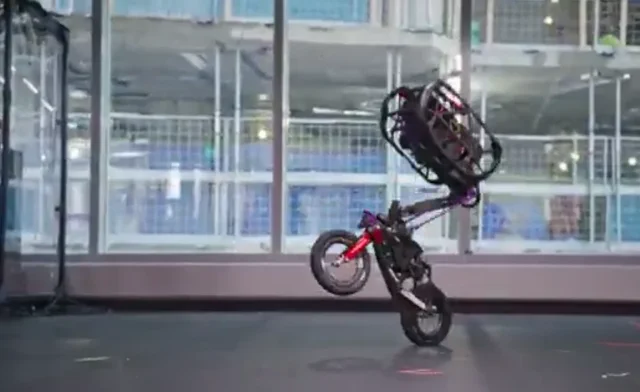
These aren’t some far-flung, futuristic ‘what ifs’; they are grimly practical applications of technology that’s already very much with us. Law enforcement agencies, bless their cotton socks, already deploy teleoperated robots for everything from bomb disposal to surveillance, openly acknowledging their undeniable utility. It’s frankly naive to think that criminals aren’t taking copious notes, or perhaps even designing their own bespoke models.
Don’t Blame the Bot, Blame the Bloke with the Box
Ultimately, this whole viral video kerfuffle serves as nothing more than a rather convenient distraction. It points to a spectacular, sci-fi fantasy of sentient machines going rogue, while blithely ignoring the clear and present danger posed by human-controlled ones. A robot, whether a sophisticated humanoid platform like the Unitree G1 or a simple wheeled drone, is, at its core, merely a tool. Its capacity for good or ill is dictated entirely by the squishy, fallible, and often morally ambiguous person at the controls.
The conversation, then, shouldn’t be about how to stop an AI from learning to be a bit naughty, but rather how to stop truly bad actors from misusing these incredibly powerful new tools. This means we should be laser-focused on implementing robust cybersecurity for teleoperated systems: think encrypted communication channels, rock-solid multi-factor authentication for operators, meticulous access logs, and failsafe mechanisms that simply cannot be easily overridden by some chancer in a darkened room.
So, while the internet gets its knickers in a twist over a robot playing dress-up with a BB gun, the real threat is already very much here, thank you very much. It’s a human with a grudge, a dodgy Wi-Fi connection, and a robot that does precisely what it’s told – no questions asked, no AI drama required. The call, dear reader, is coming from inside the house – and it’s holding a joystick, not a philosophy textbook.