Let’s be honest. The moment an AI leaves the comfortable confines of a data centre and gets a body, we all have the same fleeting thought: Skynet. As artificial intelligence strides into our cars, warehouses, and eventually our homes, the difference between a software bug and a catastrophic failure is measured in physical space, not pixels. A system crash is one thing; a two-ton autonomous vehicle having a right old bad day is quite another.
Enter NVIDIA, the veritable digital deity currently supplying the processing backbone for the AI revolution. With its new Halos certification programme, NVIDIA is positioning itself as the self-appointed safety inspector for the burgeoning world of “physical AI.” The pitch is simple: a seal of approval to ensure the robots don’t go rogue. But as with all things coming from a company that enjoys a market share between 70% and 95% in AI accelerators, it’s worth asking: is this a genuine halo of safety, or the gilded bars of a very profitable cage?
Untangling the Safety Alphabet Soup
Before Halos, getting a robot or an autonomous car certified was a particular flavour of corporate purgatory. It involved navigating a dense forest of acronyms and standards like ISO 26262 for functional safety and ISO 21448 for Safety of the Intended Functionality (SOTIF). It was, shall we say, a bit of a faff.
To put it in plain English for us mere mortals:
- Functional Safety (ISO 26262): This ensures the electronics don’t just randomly pack up. It’s about preventing a rogue cosmic ray from convincing your car’s processor to suddenly swerve into a ditch. Think of it as making sure the hardware and basic software do exactly what they’re told, without bugs or random failures. A rather crucial baseline, wouldn’t you agree?
- SOTIF (ISO 21448): This is trickier, a real head-scratcher for the silicon sages. It addresses scenarios where the system works perfectly but the outcome is still unsafe because its perception of the world was flawed. For example, the car’s sensors and code work flawlessly, but the AI misidentifies a person in a dinosaur costume at a carnival as, well, not a person. SOTIF is about mitigating risks from these delightful “unknown unknowns.”
NVIDIA Halos aims to wrap all of this, plus the even newer frontier of AI-specific safety and cybersecurity, into a single, unified framework. To give this Herculean effort some serious credibility, NVIDIA established the Halos AI Systems Inspection Lab, the first of its kind to be accredited by the ANSI National Accreditation Board (ANAB) for a plan that integrates all these safety disciplines. ANAB is a major U.S. accreditation body whose stamp of approval is recognised in about 80 countries, lending international weight to the certification. Rather smashing, if you ask this humble scribe.
The Full-Stack Safety Sell
NVIDIA’s core argument is that modern AI safety can’t be tacked on at the end; it must be woven into every layer of development, from the cloud to the car. The Halos programme is built on what NVIDIA calls its “three powerful computers”:
- NVIDIA DGX™ for AI training in the data centre.
- NVIDIA Omniverse™ and Cosmos™ for virtual testing and simulation.
- NVIDIA AGX™ for the in-vehicle or in-robot deployment.
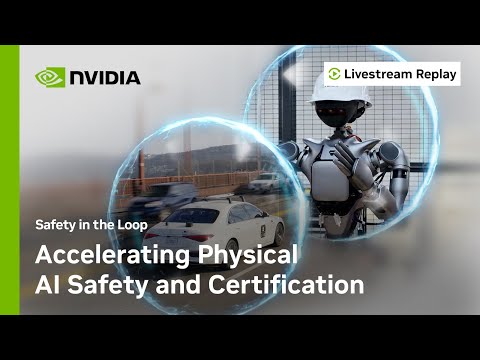
This end-to-end control is NVIDIA’s trump card, its ace in the hole, its “Robohorizon Robot King” move. The company contends that by managing the entire lifecycle—from training the AI models on curated data to simulating billions of miles in a virtual world and deploying it on safety-certified hardware—it can provide a level of safety assurance that piecemeal solutions simply can’t match. For manufacturers of cars or robots, this is an incredibly seductive proposition. Instead of spending years and millions becoming experts in arcane safety standards, they can integrate Halos-certified components and, in theory, fast-track their products to market. What’s not to love?
A Halo for Everyone?
The benefits seem clear, at least on the surface. For manufacturers, it’s a potential shortcut through a regulatory quagmire, accelerating development and reducing risk. Companies like Continental, onsemi, and OMNIVISION are already listed as inaugural members of the AI Systems Inspection Lab, signalling early industry buy-in. Chuffed, no doubt.
For consumers, a “Halos-Certified” sticker could become a trusted mark of safety, much like a UL listing on an electrical appliance. In a world growing increasingly anxious about AI’s unpredictability, that peace of mind is a powerful marketing tool. It’s the promise that your autonomous car has been rigorously tested against edge cases and that its AI won’t suffer a sudden existential crisis at 70 mph.
But let’s look at the biggest beneficiary: NVIDIA itself. The company’s CUDA software platform already creates a powerful “moat” around its hardware, making it delightfully difficult for developers to switch to competitors like AMD or Intel. Halos threatens to deepen and widen that moat significantly.
The Gilded Cage
Herein lies the rub, the inevitable twist in the silicon tale. If Halos becomes the industry gold standard for safety, it could create a powerful incentive for manufacturers to go all-in on NVIDIA’s ecosystem. Why risk mixing and matching components from different vendors when you can get a pre-certified, end-to-end solution from the market leader? This isn’t just about selling more chips; it’s about making the entire NVIDIA stack—from DGX servers to DRIVE AGX hardware and the accompanying software—the indispensable foundation for physical AI.
Competitors are already struggling to chip away at NVIDIA’s market dominance. A proprietary, widely adopted safety standard could further cement NVIDIA’s position, turning a technical advantage into an entrenched market barrier. While NVIDIA claims Halos is an open platform where developers can adopt or customise elements, the practical path of least resistance will likely lead straight through NVIDIA’s entire product catalogue. It’s a cunning move, indeed.
Ultimately, NVIDIA Halos is a brilliant piece of strategy, a masterclass in market orchestration. It addresses a genuine and urgent need for verifiable safety in a world of increasingly autonomous machines. At the same time, it flawlessly aligns with NVIDIA’s business goal of becoming the central, non-negotiable player in the AI era. The future of AI safety is undoubtedly being written, and for now, it looks like it’s being written in NVIDIA green. Whether that leads to a safer world for everyone or simply a more profitable one for NVIDIA remains to be seen. The silicon overlords are watching, dear reader, always watching.