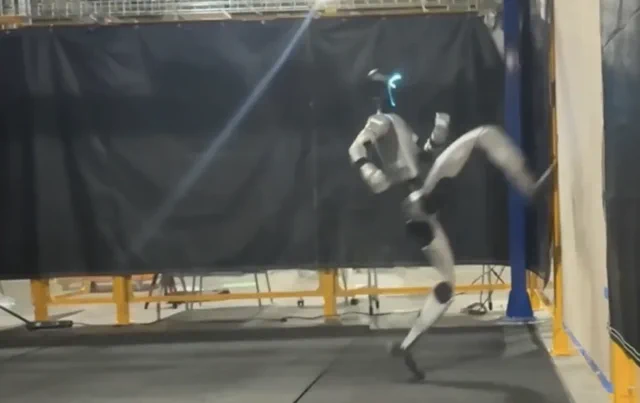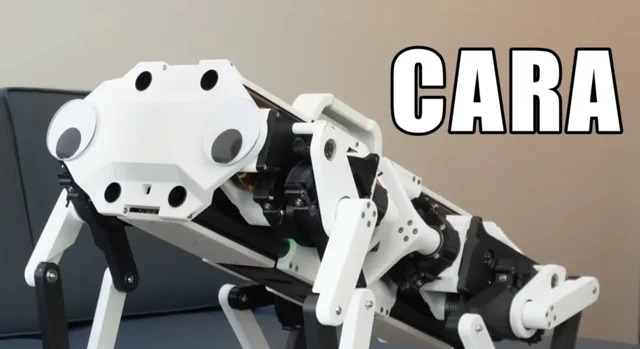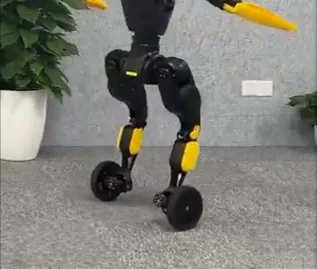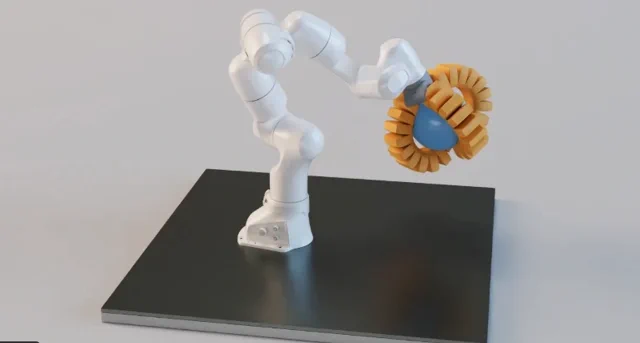
For years, the most stubborn hurdle in robotics hasn’t actually been the robots themselves. It’s been the yawning chasm between the pristine virtual worlds where they learn and the messy, unforgiving physics of our own. This “sim-to-real” gap has acted as a silent handbrake on progress; a robot can spend a thousand hours training in a simulation, only to fall flat on its face the second it encounters a stray cable or a bit of spilt tea. Now, a heavyweight collaboration is looking to build a permanent bridge across that divide.
The Linux Foundation, the neutral custodian of the world’s most vital open-source projects, has announced the general availability of Newton 1.0. It is an open-source, extensible, GPU-accelerated physics engine crafted specifically for the rigours of robotic training. The roster of developers behind it is enough to make any industry veteran do a double-take: NVIDIA, Google DeepMind, and, in a fascinating twist, Disney Research. This isn’t just another niche simulator; it’s a concerted push to establish a “lingua franca” of physics for the entire industry.
The Unlikely Trinity Forging a New Robotic Reality
At first glance, the partnership looks… well, eclectic. You have NVIDIA, the undisputed titan of GPU hardware and simulation platforms like Isaac Sim. Then there’s Google DeepMind, the AI research powerhouse that already holds the keys to MuJoCo, one of the most respected physics engines in the academic world. And finally, you have Disney Research and Walt Disney Imagineering—the wizards who have spent decades ensuring Captain Jack Sparrow’s animatronic swagger looks authentically roguish.
But the logic is sound. NVIDIA provides the high-octane computing backbone via its Warp framework. Google DeepMind contributes its peerless expertise in robot learning and physical simulation. And Disney? They are the masters of complex, real-world robotic systems that must perform flawlessly millions of times over. This collaboration blends raw speed with a deep, intuitive understanding of physical nuance.
By anchoring Newton at the Linux Foundation, the project gains something indispensable: neutral governance. It ensures that this foundational layer of the robotics stack won’t be held hostage by a single corporate entity, encouraging widespread adoption and a community-first approach to development.
What’s Under the Bonnet of Newton 1.0?
Newton 1.0 isn’t just about cranking up the frame rate; it’s about solving the “crunchy,” contact-heavy problems that have historically left other engines wheezing. The goal is to master scenarios like a robot navigating loose gravel, handling delicate soft fruit, or untangling a flexible power lead. To achieve this, it boasts several standout features:
- GPU Acceleration: Built on NVIDIA Warp, Newton is designed from the ground up to thrive on GPUs. This slashes simulation times from days to mere minutes, allowing for massive parallel training. NVIDIA claims that on its latest silicon, Newton can outpace alternatives by up to 475 times for specific manipulation tasks.
- Deformable and Soft Bodies: The “holy grail” of simulation is accurately modelling things that aren’t rigid—think cables, fabrics, and rubber. Newton includes bespoke solvers designed specifically for these squishy materials. Early adopters like Samsung are already putting this to work, simulating cable management for refrigerator assembly lines.
- Hydroelastic Contact Modelling: Moving beyond simple point-based contact, hydroelastic models simulate the pressure distribution across an entire contact patch. This provides a far richer, more realistic representation of how objects touch and deform, which is vital for tasks requiring a “feather-light” touch or a complex understanding of friction.
- Differentiable Physics: Newton’s physics are fully differentiable. In layman’s terms, this means machine learning models can “see through” the simulation to understand exactly how their actions influence the outcome. By allowing gradients to propagate through the simulation, it massively accelerates the training and optimisation process.
Hyperlink: Newton Project on GitHub
A Universal Language for the Robotic Metaverse
Newton isn’t entering an empty room. The physics engine arena is already crowded with names like PyBullet and Google’s own MuJoCo. However, Newton’s strategy is one of unification rather than displacement. It integrates MuJoCo Warp (a GPU-optimised variant of MuJoCo) as a core solver, positioning itself as a grand unifying framework. Built on the OpenUSD standard, it allows for seamless, interoperable descriptions of robots and their environments.
The launch of Newton 1.0, steered by the Linux Foundation and backed by the biggest hitters in the game, feels like a watershed moment. The objective isn’t merely to build a better engine, but to create a “physics kernel” for the future of robotics. By making a high-performance, open-source simulation engine freely available, the project lowers the barrier to entry for everyone—from garage tinkerers to global conglomerates. This is how industry standards are forged. The sim-to-real gap might not vanish by tea-time tomorrow, but with Newton, the far side of the chasm has never looked closer.