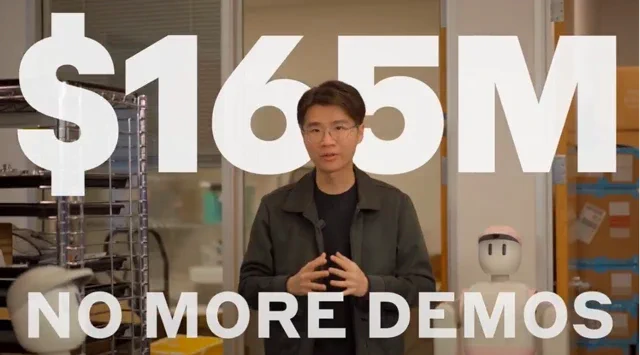
The robotics industry has a grubby little secret: it lives and breathes on the “spectacular demo”. For years, we’ve been fed a highlight reel of robots performing backflips, busting moves, and delicately plating up Michelin-star meals in pristine laboratory settings. The trouble is, most of these mechanical marvels are about as autonomous as a Punch and Judy show, and their chances of surviving five minutes in your cluttered, unpredictable kitchen are practically zero. Now, a startup by the name of Sunday Robotics has burst onto the scene with a $165 million Series B war chest and a bold promise: to kill off the “demo culture” for good.
Their claim is either incredibly brave or spectacularly foolish: they intend to deploy the “world’s first autonomous home robots into households this year.” Yes, this year. Backed by a heavyweight roster including Coatue, Bain Capital Ventures, and Tiger Global, Sunday isn’t just tinkering with another lab toy. They’re placing a nine-figure bet that they’ve finally cracked the code to making robots genuinely useful outside of a PowerPoint presentation. The company’s new $1.15 billion valuation suggests some very serious players are convinced they’re onto something.
The “Demo-to-Dead-End” Pipeline
For those of us who have tracked this industry for a decade, a healthy dose of scepticism is part of the job. The road to domestic robotics is littered with the wreckage of ambitious projects that looked brilliant on YouTube but fell apart the moment they encountered reality. The core hurdle has never just been the hardware; it’s the brains. A real home is a chaotic minefield of stray socks, erratic pets, and coffee tables that seem to move of their own accord. An effective home robot needs to navigate this mess with grace, not just repeat a pre-programmed script.
This is what makes Sunday’s declaration so audacious. In their announcement, they hit the nail on the head: “deploying autonomous, dexterous manipulation in real-world homes has never been achieved.” They aren’t just acknowledging the elephant in the room; they’re claiming to have tamed it. And they’re inviting the public to watch the process, promising to “document the journey for all” as they roll out a public beta.
Sunday’s Secret Ingredient? No Puppeteers, Just Practice.
So, why does Sunday reckon they can succeed where so many others have hit a brick wall? Their approach sidesteps the industry’s over-reliance on “teleoperation”—where humans remotely pilot robots to generate training data. As we’ve explored previously, Sunday AI Teaches Chores: No Robot Puppets Needed , Sunday’s method is far more hands-on.
Founded by Stanford PhDs Tony Zhao and Cheng Chi, the company has developed a proprietary “Skill Capture Glove.” Rather than fiddling with joysticks, human data collectors wear these gloves to perform actual household chores, generating a massive, high-quality dataset of how tasks are performed in the wild. This data, harvested from over 500 homes, serves as the neural foundation for their robot, Memo. By owning the entire stack—from the bespoke hardware to the data collection and model training—Sunday claims it can iterate at a speed that leaves the rest of the industry in the dust.
“Data has always been the biggest bottleneck in robotics,” said Tony Zhao, CEO of Sunday. “We’ve built the only pipeline that transforms the chaos of real-world homes into autonomous intelligence at scale.”
Putting $165 Million on the Line
This massive funding round is more than just a pat on the back; it’s rocket fuel for an incredibly tight schedule. Deploying a beta version of a complex, autonomous robot into real homes within months is a logistical and technical nightmare. It’s a high-stakes test of safety, reliability, and managing the sky-high expectations of the public.
The company’s robot, Memo, has been designed with these hurdles in mind. It sits on a rolling base for stability, dodging the inherent balance issues of bipedal designs that have a habit of, well, falling over. The goal isn’t a flashy humanoid showpiece, but a practical assistant capable of tackling the “drudge work”: stacking the dishwasher, folding the laundry, and tidying up the lounge.
The ultimate question remains: can Sunday’s data-first approach truly bridge the gap between a controlled demo and the beautiful chaos of a family home? The robotics industry has spent years over-promising on the “home of the future.” Sunday Robotics has just raised $165 million and started a very public countdown to actually delivering it. Your move, Sunday. We’ll be watching closely.