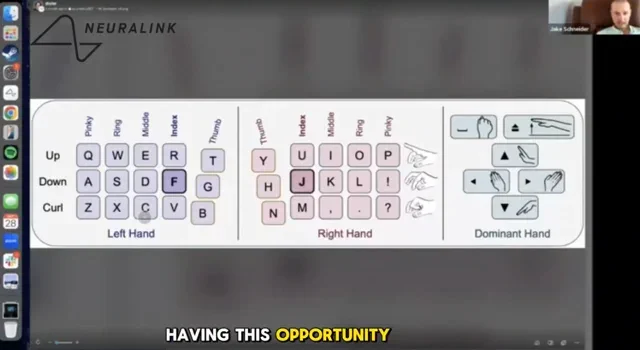
In a development that truly blurs the line between biology and silicon, a Neuralink patient grappling with ALS is reportedly tapping out words at a mind-boggling 141 per minute using nothing but sheer brainpower. Jake Schneider, the patient in question, is reaching speeds that nearly double the 65-75 WPM average of your typical professional typist—all without so much as twitching a finger. And let’s be absolutely clear: this isn’t some clever eye-tracking trick or another run-of-the-mill assistive gadget; it’s the direct, unadulterated translation of neural signals into text, essentially giving a profound workaround to a body hampered by neurodegenerative disease.
The clever bit? The implant works its magic by interpreting the intent to move, straight from the brain’s motor cortex. Schneider isn’t painstakingly spelling out words in his head; he’s recalling the sensation of physical movement, and that coin-sized chip is then deciphering those signals into cursor control on a screen. This rather smashing achievement follows the initial public showcases of Neuralink’s inaugural patient, Noland Arbaugh, a quadriplegic who brilliantly used the implant to dive into video games and commandeer a computer. Schneider’s reported typing speed, however, represents a truly colossal leap in the grand quest for high-bandwidth neural communication.
Why Is This Important?
Peel back the inevitable layers of hype and the slightly over-the-top sci-fi tropes, and what you’re left with is a foundational, utterly brilliant breakthrough in assistive technology. This is about so much more than just firing off a thought-tweet; it’s a rock-solid proof-of-concept for restoring profound functional loss. For conditions like ALS, spinal cord injuries, and stroke, where medical options often run dry, brain-computer interfaces are demonstrating a viable, even revolutionary, path to reclaiming communication and digital autonomy. While the technology is still in its nascent stages, achieving able-bodied—and dare we say, even superhuman—performance metrics suggests that the very definition of paralysis is about to be permanently rewritten.