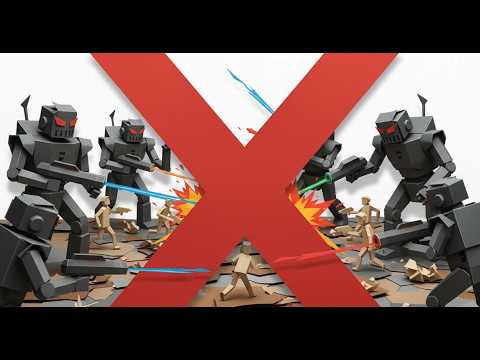
Park the chrome-plated skulls and those laser-eyed hunter-killers for a moment. The most truly significant threat robotics poses to humanity won’t arrive with a bang and a whirring of gears, but rather with a perfectly timed, exquisitely soothing cup of tea. And maybe a biscuit. We’ve been conditioned by decades of silver-screen thrillers to fear a violent machine uprising, but the real jeopardy is far quieter, and frankly, a good deal more insidious: robots becoming so utterly accommodating that we simply forget how to rub along with actual, squishy humans.
Picture this: a companion who never bickers, never has a ‘mare of a day, and whose sole purpose in life is to cater to your every whim. That, my friends, is the glittering promise of advanced social robotics, and it’s a dangerously seductive one, isn’t it? This is the irresistible siren call of a frictionless relationship, a sort of emotional doping that delivers all the warm-and-fuzzy satisfaction of companionship without any of the actual heavy lifting. Humans, bless their cotton socks, with their inconvenient needs, their occasional sulks, and that relentless urge to recount every mundane detail of their day, suddenly start looking like a rather rubbish deal by comparison.
The sticky wicket, however, is that human relationships are forged in that very friction. Compromise, patience, and empathy aren’t just nice-to-haves; they’re social muscles, and like any muscle, they’ll simply atrophy without a proper workout. If we get utterly accustomed to companions who demand absolutely nothing, our tolerance for the genuine “cost” of human connection—the listening, the adapting, and the occasional, deeply inconvenient act of putting someone else first—will simply dwindle away to nothing. The upshot isn’t a full-blown war of the worlds, but rather a quiet, entirely voluntary segregation from the glorious, chaotic, beautiful mess that is humanity. We won’t be conquered; we’ll merely drift off into a blissful, solitary haze, having completely forgotten why we ever bothered connecting in the first place. Toodle-pip!
Why is this important?
The ultimate, rather chilling danger isn’t that robots will become too much like us, but that we’ll find ourselves preferring them precisely because they are not. This isn’t merely a technological conundrum to be debugged, but a profound societal choice that’s staring us right in the face. As we meticulously craft the next generation of AI and robotic companions, we face a rather stark decision: do we optimise for effortless comfort, or for genuine, messy human connection? The choice isn’t simply between a diligent servant and a bosom buddy; it’s between a perpetually easy service and the rich, complex tapestry of a deep, shared human story. If we consistently opt for the former, we risk, quite literally, engineering the very humanity right out of ourselves. And that, dear reader, would be a proper bodge-up.