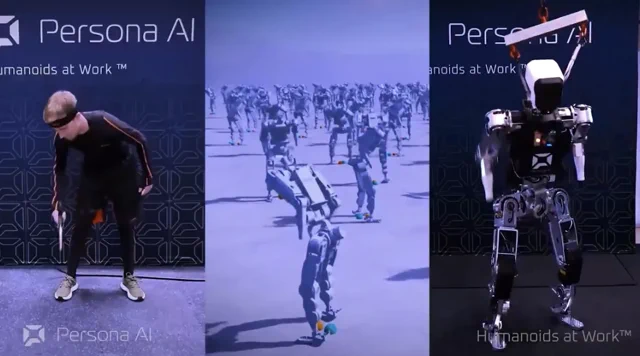
The race to build a capable humanoid robot is swiftly morphing from a hardware hoedown into a philosophical brain-teaser worthy of a late-night pub debate: what’s the most brilliant way to teach a machine? On one side, you’ve got companies like Sunday, placing their chips on a veritable army of human tutors. On the other, giants like Tesla and Nvidia are banking on their metallic mates picking up skills just by binge-watching YouTube tutorials. This strategic split defines the entire field, and it’s a right old pickle, with no one quite agreeing on the secret sauce.
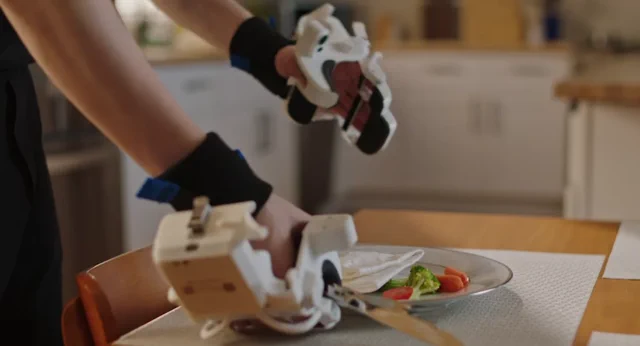
Sunday is going full throttle on imitation learning, equipping 500 “memory developers” with special gloves to painstakingly log top-drawer data for every conceivable domestic drama. The company claims this method allows it to train and evaluate a new task every one to two weeks, creating what it calls the “world’s fastest learning robot” – truly the undisputed Usain Bolt of robot learners. It’s a hands-on, rather bespoke, white-glove approach to data collection, focused more about the gourmet meal than the all-you-can-eat buffet when it comes to quality over sheer quantity.
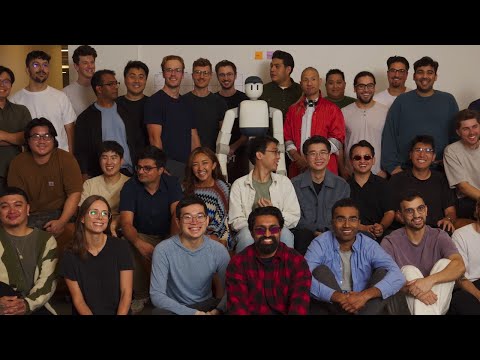
This human-centric model isn’t a one-trick pony, mind you, and has a few clever variations. The Norwegian firm 1X Technologies also uses human guidance, but instead of gloves and curated sessions, it chucks its 1X Neo: Jól megfizetett AI komornyikod itt van metallic marvels straight into the deep end of real-world scenarios to pick up the ropes through good old teleoperation. It’s less ‘chalk and talk’ and more ’learning the hard way’ apprenticeship. Meanwhile, Figure is crafting bespoke physical “Neura Gyms,” purpose-built playgrounds where its robots can train on specific tasks, sometimes in partnership with companies like BMW.
Then there’s the ‘popcorn and pixels’ brigade. Tesla has been rather chuffed about its grand vision for the Optimus bot to learn tasks just by clocking videos of humans performing them. Nvidia, with its NVIDIA's Cosmos: A Robot Training Matrix platform, is also harnessing the power of digital doppelgängers and enough internet video to make your eyes water, all to train its foundation models for robotics. This method promises a simply smashing scale—there’s enough ‘how-to’ footage online to keep a small nation of memory developers busy until the heat death of the universe—but it often gets a bit muddled with context, the nitty-gritty of embodiment, and the absolute cacophony of unstructured data.
Why Is This Important?
The great training schism in methodology represents the Everest of obstacles to creating a proper, all-singing, all-dancing general-purpose robot. The core of the debate is a good old-fashioned quality versus quantity kerfuffle, turbo-charged by the mind-bending complexities of physical interaction.
Is a painstakingly polished, top-tier dataset from human demonstrators—like the one Translation not available (en-gb) is building—the key to flawless task execution? Or will the sheer, glorious, often-bonkers volume of internet data ultimately provide a more bulletproof and scalable yellow brick road to intelligence, as Tesla and Nvidia believe? The company that solves this scalable learning conundrum won’t just knock out a cracking robot; it will likely write the rulebook for the next decade of artificial intelligence and automation, full stop.