In the dizzying realm of automation, where ambitions often crash against the jagged rocks of reality, some problems are so notoriously stubborn they earn themselves a moniker usually reserved for the most impenetrable mathematical puzzles. Yet, a plucky robotics startup by the name of TARS has just swaggered onto the scene, claiming to have cracked one. At its rather aptly named “Needle Kung Fu” tech debut, the company unveiled what it’s calling the world’s first autonomous embroidery robot. And while a robot with a thimble might sound like a charming parlour trick, the real headline is its astonishing ability to transfer that delicate skill to the decidedly less glamorous, often infuriating, world of industrial wire harness assembly. This, my dear readers, effectively unpicks a bottleneck so persistent, so utterly vexing, it had been affectionately nicknamed the “Goldbach Conjecture” of the industry.
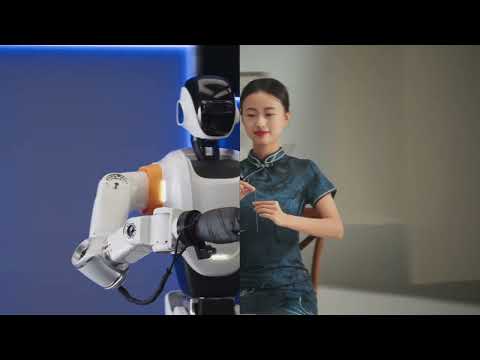
According to the brilliant mind of Founder & CEO Dr. Yilun Chen, the company’s frankly dizzying progress—it only popped into existence less than a year ago in February 2025—is down to what he terms a full-stack “DATA – AI – PHYSICS” trinity. It kicks off with SenseHub, a clever bit of kit that’s essentially a wearable system, hoovering up multi-modal data from human workers to school the AI. That data then gets funnelled into TARS AWE 2.0, a foundation model designed for end-to-end learning, allowing those hard-won skills to be generalised across a smorgasbord of different tasks. Finally, the company’s “Born for AI” T-Series and A-Series robots are bespoke machines, engineered from the ground up to minimise that infuriating chasm between pristine digital simulation and the glorious, messy reality of the factory floor.
Why is this important?
While a robot meticulously embroidering a logo is, undoubtedly, a rather neat party trick that would go down a treat at any tech-bro soirée, the true narrative here is the verified, industrial-grade proof of concept for the Embodied AI Scaling Law. What TARS is demonstrating is a crystal-clear, utterly reproducible methodology for imbuing robots with complex, dexterous tasks that involve working with soft and deformable materials—a hurdle so massive it’s often felt like trying to knit fog. By tackling and, crucially, solving a genuine, greasy-fingered industrial problem, rather than just finessing another slick lab demo, the company is showcasing a tangible, scalable path from the factory floor to, eventually, the comfort of your own home. Now, if it can just learn to darn socks and mend my favourite jumpers, the robot revolution will truly be complete, and I’ll be chuffed to bits.