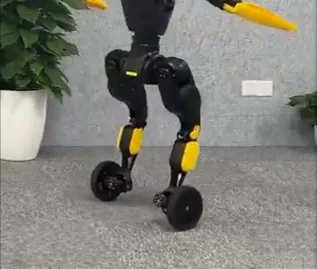
Tesla, Inc. has just unveiled the latest appendages for its Optimus Gen 3 humanoid, and these aren’t just any old mitts – they represent a rather quiet, yet utterly smashing leap in dexterity. Each hand now boasts a whopping 22 degrees of freedom (DoF), which, for those keeping score at home, is a substantial upgrade from the previous 11-DoF iteration and, quite frankly, tantalisingly close to the 27 DoF of our very own squishy human hands. Crammed to the gills with tactile sensors reportedly four times more sensitive than the last go-round, these digital digits are already grafting away in Tesla’s Fremont factory. They’re not just twiddling their metallic thumbs, mind you; they’re assembling battery cells and handling delicate wiring with a precision that’s frankly a bit unnerving. The grand plan? A hand tough enough to endure millions of cycles, yet affordable enough for mass production, because even world domination needs a budget.
Naturally, with any project bearing the indelible stamp of Elon Musk, the ambition rarely stops at merely crafting a more efficient factory drone. Oh no, that would be far too pedestrian. In a statement that probably made a few astronomers spill their Earl Grey, Musk recently declared, with all the casual gravitas of someone discussing the weather, that “Optimus will be the Von Neumann probe.” Now, for those who haven’t spent their evenings devouring sci-fi lore, that’s a rather grand nod to physicist John von Neumann’s theoretical self-replicating spacecraft – the kind designed to zip across the galaxy, hoovering up resources and spawning copies of itself at an exponential rate. It’s a classic Muskian sleight of hand: present a genuinely impressive, albeit incremental, hardware tweak, then, almost as an afterthought, casually drop the bombshell that it’s all just a tiny stepping stone on the path to colonising the entire bloomin’ universe.
So, whilst today Optimus might be diligently learning the intricate art of folding laundry (a skill many of us mere mortals still haven’t mastered), Musk’s rather expansive roadmap envisions billions of these bots first liberating us from earthly toil, before being packed off to Mars and the asteroid belt. There, they’ll dutifully construct the foundational infrastructure for an off-world civilisation, presumably one with very neatly folded towels. These new hands, you see, are a critical cog in that frankly bonkers puzzle. A robot capable of birthing another robot—from the gritty business of mining ore to the delicate twist of the final screw—is the terrestrial warm-up act for a machine that can pull off the same trick on a distant moon. It’s a plan so utterly audacious it practically winks at science fiction, yet the nuts and bolts of the engineering are unfolding right before our very eyes.
Why is this important?
Now, let’s get down to brass tacks: this development is far more than just a snazzy hardware upgrade; it’s a blaring siren, signalling a fundamental, frankly mind-boggling, ambition to pivot robotics from the mundane realm of single-task automation to the dizzying heights of universal, self-replicating labour. The sheer dexterity of these Gen 3 hands is a absolutely pivotal stride towards conjuring up a “universal constructor”—essentially, a machine that can knock up anything, including, rather crucially, itself. If Tesla can crack the immense, borderline-Herculean challenge of forging a truly general-purpose, self-replicating humanoid, it wouldn’t merely be lording it over the factory floor. Oh no, it would lay the very bedrock for a scalable, off-world industrial base, thereby rather neatly transmuting a concept plucked straight from the pages of science fiction into a very real, very ambitious long-term corporate mission. And that, dear readers, is quite something.