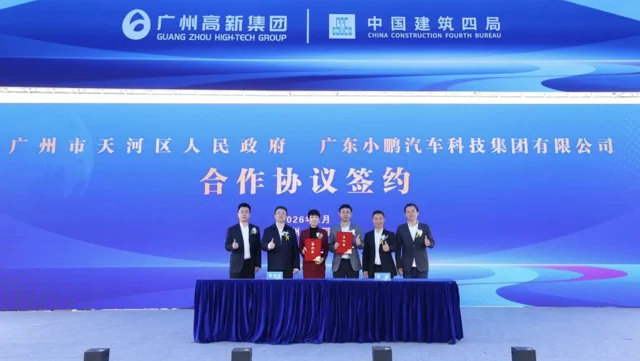
Just when Nvidia was perhaps starting to get a tad too comfortable, lounging rather smugly on its silicon throne in the autonomous vehicle hardware kingdom, a fresh contender has swaggered into the ring. And, rather brilliantly, it brought Volkswagen AG as its very own, rather beefy, backup. At its recent AI Day, Chinese EV disruptor XPeng Inc. dropped a bombshell: Volkswagen will not only be the inaugural customer for XPeng’s shiny new VLA 2.0 autonomous driving platform but will also license the entire hardware and software stack for its EVs in China, kicking off in 2026. This isn’t just a mere component exchange; it’s a full-on, mic-drop challenge to Nvidia’s hallowed DRIVE platform, emanating from a company that, let’s be honest, was until recently just another name on Nvidia’s customer list.
The crown jewel of XPeng’s rather audacious play is undoubtedly its brand-spanking-new Turing AI chip, paired with the equally impressive VLA 2.0 large model architecture. XPeng is confidently asserting that this system can chew through models boasting billions of parameters, all running directly on its in-vehicle hardware. That’s a rather significant leap, mind you, from the mere tens of millions typically seen knocking about the industry. The crème de la crème of their consumer models will strut around with a hefty 2250 TOPS of compute, while the forthcoming Robotaxi platform plans to go full throttle with four Turing chips, delivering a simply staggering 3000 TOPS. Clearly, Volkswagen has seen enough to put its money where its mouth is, betting its entire “In China, for China” strategy on this tech, eager to slash development cycles and give its rivals a proper run for their money in the notoriously cutthroat local market.

But hold your horses, because XPeng’s ambition doesn’t merely stop at dishing out software licenses. Oh no. The company is brazenly positioning itself as a bona fide “Physical AI” powerhouse, simultaneously pulling out all the stops and unveiling plans for a Robotaxi service hitting the streets in 2026, a brand-new, hyper-realistic humanoid robot (because, why not?), and, naturally, the ever-present, perpetually just-around-the-corner promise of flying cars. The Robotaxi, it’s worth noting, is aiming for a pure-vision approach – that’s right, no LiDAR, no high-precision maps – a direct, philosophical twin to Tesla’s famously minimalist strategy. It’s an aggressive, all-in wager on a vertically integrated AI ecosystem that’s clearly designed to stretch well beyond the humble automobile.


Why This Is Rather A Big Deal
For eons, the self-driving narrative was as straightforward as a single-lane road: automakers either snapped up a full-stack solution from a heavyweight supplier like Nvidia or, bless their cotton socks, attempted to concoct their own, much like Tesla. XPeng’s audacious pact with Volkswagen, however, has utterly scrambled that long-standing equation. Suddenly, a relatively fresh-faced EV player finds itself transformed into a core technology linchpin for one of the planet’s behemoth legacy automakers. This burgeoning partnership doesn’t just add another player to the autonomous race; it forges a formidable third bloc, potentially well and truly boxing Nvidia out of a rather significant slice of the world’s largest EV market. More crucially, it’s proving, once and for all, that the most valuable asset isn’t merely the glistening silicon, but the intelligent, vertically integrated software stack lovingly crafted atop it.