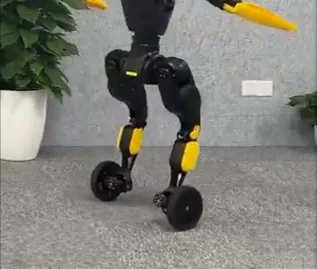
While the tech world remains spellbound by the latest humanoid performing backflips for the cameras, the real robotic workhorses powering the global economy are quietly cementing an unassailable lead for Asia. A recent analysis doing the rounds on social media highlights a sobering reality: the world of industrial robotics—the sector that actually builds things and generates cold, hard cash—is overwhelmingly dominated by Asian-owned firms, protected by a formidable wall of patents.
The post, shared by investor Alysha Lobo, points out that the major players in the industrial automation space are now effectively under Asian ownership. This includes Japanese heavyweights Fanuc, Yaskawa, and Kawasaki, alongside the German robotics pioneer KUKA, which was snapped up by China’s Midea Group in 2016. The analysis also highlights ABB, the Swiss-Swedish multinational, whose robotics division is set to be acquired by Japan’s SoftBank Group in a deal slated to close in 2026.
This isn’t just a shift in corporate letterheads; it’s about a deep intellectual property moat that is becoming increasingly difficult to cross. Japanese firms alone account for five of the world’s top ten industrial robot manufacturers. Fanuc Corporation and Yaskawa Electric Corp. hold tens of thousands of patents globally, the result of decades of relentless innovation on the factory floor. These patents aren’t for flashy PR demos; they cover the granular, unglamorous, and absolutely vital breakthroughs in reliability, precision, and efficiency that keep modern manufacturing lines moving.
Why does this matter?
The concentration of industrial robotics IP in Asia represents a seismic shift in global manufacturing capability. While venture capital floods into humanoid startups promising a future where robots do everything, these established Asian giants have already automated the now. Their patent portfolios are a defensive barrier built on decades of real-world application, shop-floor data, and deep integration into complex global supply chains.
For Western competitors, catching up isn’t just a matter of designing a slicker robot; it’s about overcoming a colossal head start in institutional knowledge and protected innovation. The “boring,” reliable robotic arms in a factory in Guangzhou or Toyota City are where the true economic power resides. Humanoids are the shiny new toys of the tech world, but as the patent data proves, industrial robots are the foundation—and that foundation is now firmly anchored in the East.