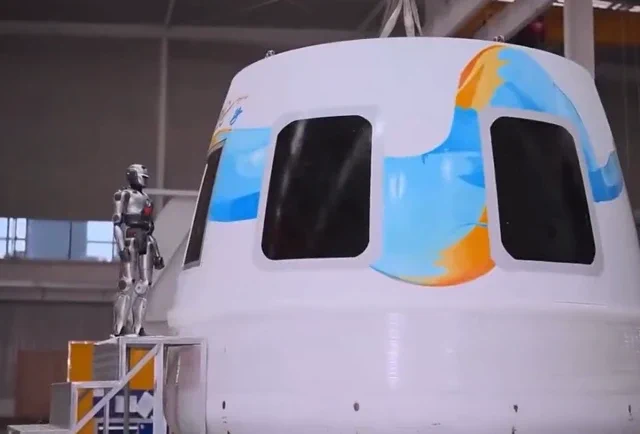
In the increasingly congested scramble to get bipedal bots into the stars, EngineAI has just thrown its hat—or perhaps its visor—into the ring. The firm has announced a high-stakes partnership with commercial spaceflight outfit InterstellOr to launch one of its humanoids on a suborbital mission slated for 2028. The mission is designed to put the robot through its paces in a microgravity environment—a vital dress rehearsal before these machines are handed the keys to more ambitious orbital workstations.
This announcement isn’t happening in a vacuum, of course. NASA has been fastidiously tinkering with its Valkyrie humanoid for years, with the long-term goal of deploying it for missions to the Moon and Mars. The agency is also rubbing shoulders with companies like Apptronik on its Apollo robot to accelerate the commercialisation of humanoids for both terrestrial and extraterrestrial graft. And then there’s the 800lb gorilla in the room: Tesla’s Optimus. Elon Musk has hardly been quiet about his grand designs to ship his own robots to Mars, presumably aboard a SpaceX Starship, to prep the red planet for human colonisation. One has to wonder if EngineAI’s 2028 target will be gazumped by a fleet of Teslabots.
The push for humanoid robots in space isn’t just about flashy demos and PR wins. The strategic logic is sound: offload the “three Ds”—the dull, the dirty, and the downright dangerous—from human astronauts. These robots are engineered to use the same tools and navigate the same workspaces as we do, meaning they could one day perform critical maintenance, fix malfunctioning kit, or even bolt together orbital structures without putting a single human life at risk.
Why does this matter?
Launching a humanoid into space, even for a quick suborbital hop, represents a massive technical hurdle and a crucial validation step. For EngineAI, this mission is less about winning a “race” and more about proving its hardware can withstand the unforgiving realities of spaceflight. The broader implication is the formal birth of a new commercial sector: robotic labour beyond Earth. While government agencies like NASA did the heavy lifting to pave the way, private ventures are now jostling to provide the robotic workforce that will build and maintain future infrastructure on the Moon, Mars, and orbital stations. The era of the robotic astronaut hasn’t just arrived; it’s clocking in for its first shift.