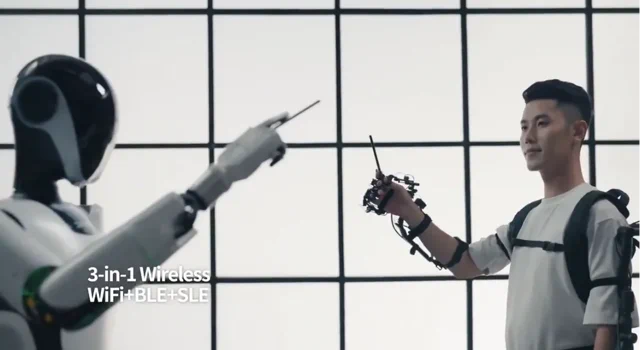
In our never-ending, slightly-too-earnest crusade to coax humanoid robots out of their perpetual state of Bambi-on-ice awkwardness, a rather brilliant, if slightly dystopian, new paradigm is emerging from the digital ether. One that involves turning us, the squishy, error-prone humans, into real-time puppet masters. Picture this: an operator, kitted out in a snazzy exoskeleton, isn’t just waving a remote control; they’re embodying the robot. They’re directly piloting these metallic marvels through complex tasks, all while hoovering up a veritable firehose of high-fidelity data – the kind of granular, nitty-gritty stuff that makes even the most sophisticated simulations weep with envy. This isn’t just for kicks; it’s a cunning gambit to sidestep the notoriously expensive and glacially slow grind of collecting real-world training data.
And who, you might ask, is pulling these strings of innovation? None other than Daimon Robotics, a Hong Kong outfit that’s clearly got its head screwed on right. They’ve cooked up the DM-EXton, a wearable teleoperation system that’s as slick as it sounds, purpose-built for this very digital puppetry. An operator slips into this surprisingly lightweight suit and, presto, they’re practically inside the humanoid, guiding its every twitch and gesture with uncanny precision. Meanwhile, the robot’s arsenal of multimodal sensors – think eyes that see, arms that feel force, and the holy grail of haptics, crucial tactile feedback – dutifully logs every single, glorious nuance of the interaction. This isn’t just a party trick; it’s a data goldmine, churning out the wonderfully messy, gloriously authentic data that’s absolutely vital for forging robust AI models. It’s essentially a rocket-powered leap over the chasm known as the “sim-to-real” gap, a chasm that’s swallowed many a promising robot project whole.
Why this is a cracking good idea
Let’s be crystal clear: this isn’t merely some souped-up remote control for your average bot. No, this is a bonafide data generation engine, humming along, ready to fuel the next generation of artificial intelligence. By ingeniously forging a closed loop—human skill feeding into robot action, which in turn feeds into model training—companies can now, with breathtaking speed, conjure sophisticated behavioural models from an astonishingly rich dataset. And while the immediate, rather obvious goal is a legion of smarter, less-prone-to-tripping robots, the tendrils of this technology stretch far wider. Think remote work in environments that would give a health and safety officer nightmares, precision manufacturing that makes Swiss watches look clunky, and even assistive care that could genuinely change lives. With Daimon Robotics all set to unveil the even more spiffing DM-EXton2 system at CES 2026, the industry’s wager is plain for all to see: the quickest, most direct route to crafting an artificial human is, rather brilliantly, to kick things off with a real one. One might even say, it’s a stroke of genius.