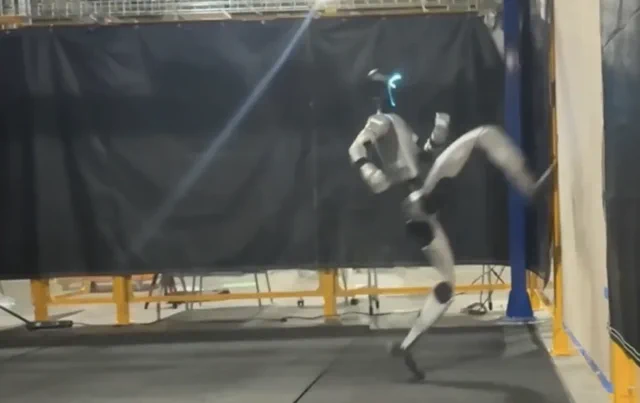
Hyundai Motor Group’s ambitious plan to deploy Boston Dynamics’ formidable new Atlas humanoid robot onto its assembly lines has hit a significant roadblock: a defiant trade union. Fearing that these high-tech automatons are coming for their livelihoods, the carmaker’s powerful labour union has voiced “deep concern” over the move. In a sternly worded missive, the union declared that “not a single robot using new technology will be allowed to enter the workplace” without a formal labour-management agreement.
The all-electric Atlas—a far more agile beast than its clunky hydraulic predecessor—is currently slated for pilot testing across Hyundai’s manufacturing plants. The deployment is a cornerstone of Hyundai’s grand vision for a “human-centred” smart factory. However, the actual humans on the shop floor are questioning exactly how “centred” they remain when a bipedal machine capable of hoisting 50kg (110lbs) is being prepped to do their jobs with tireless precision. This is the same production-ready Atlas that Hyundai & Boston Dynamics unveil production Atlas robot at CES, trading the glitz of the tech stage for the grit of the factory floor.
This isn’t just a case of industrial grumbling; the union is leaning on a collective bargaining agreement that mandates mutual consent before the company can roll out new technologies that impact job roles. A spokesperson from the union’s policy planning office clarified that while they aren’t inherently anti-tech, they are wary of any deployment designed to “replace human labour.” Watching the stock market’s euphoric reaction to the robot’s debut, union leaders remarked that they were left wondering “whether to laugh or cry.”
Why does this matter?
The stand-off at Hyundai is more than a local industrial dispute; it is a critical bellwether for the future of global manufacturing. For decades, humanoid robots were a tantalising but distant sci-fi dream. Now, as they become commercially viable—with Hyundai aiming to produce up to 30,000 units annually by 2028—their arrival in heavily unionised industries like car manufacturing is forcing a direct confrontation between the drive for automation and long-standing worker protections. How Hyundai and its workforce navigate this friction will set a massive precedent for every other industry currently wondering when their new robotic colleagues might start their first shift.