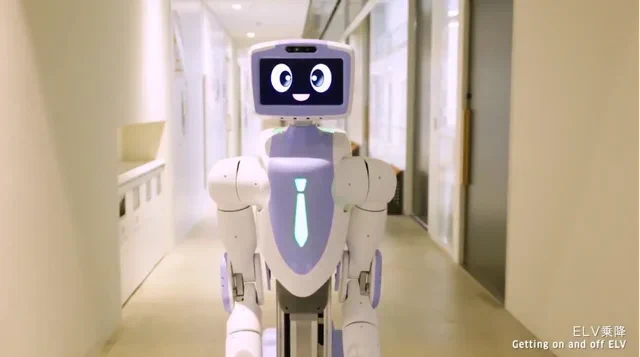
Forget the tedious wait for a battery to top up. Kawasaki Heavy Industries, Ltd., in a joint venture with Toyota Boshoku Corporation and Daido University, has just pulled a blinder. They’ve unveiled a hydrogen-powered iteration of the Nyokkey service robot, designed to crack the code of near-perpetual operation in a Japan currently staring down the barrel of a historic labour crisis. First seen in 2022, this bot is finally getting the endurance upgrade it deserves.
The secret sauce behind Nyokkey’s endless shift is a compact fuel cell (FC) unit and a system of swappable, low-pressure hydrogen cartridges. It’s a clever bit of engineering that sidesteps the “range anxiety” of the robotics world; instead of being tethered to a charging dock for hours, Nyokkey’s tank can be swapped out in moments—a process significantly faster than brewing a proper cuppa. By opting for low-pressure cartridges, the team has also ensured the bot is safer and far less fiddly to handle than high-pressure alternatives.
This dual-armed “social robot” is destined for the front lines: hospitals, care homes, and busy offices. Its CV includes delivering meals, carting lab samples, patrolling corridors, and even opening doors—all while deftly dodging its fleshy, somewhat slower human colleagues thanks to a sophisticated suite of LiDAR sensors.
Why does this matter?
This isn’t just a flashy tech demo for the sake of it; it’s a direct response to a looming demographic cliff edge. With an ageing population, Japan is projected to face a staggering shortfall of 11 million workers by 2040. A robot that doesn’t need a nap or a plug socket is a compelling—if slightly sci-fi—answer to a very real national emergency. By ditching lithium-ion for hydrogen, Kawasaki is sketching out a future where automation fills critical gaps without requiring a massive, expensive overhaul of our existing electrical infrastructure. It might just set the new gold standard for service robots in the sectors that need them most.