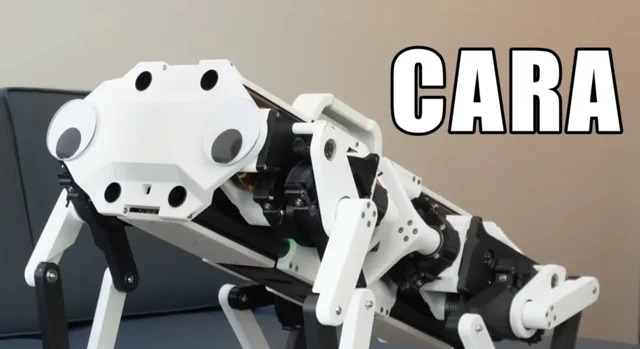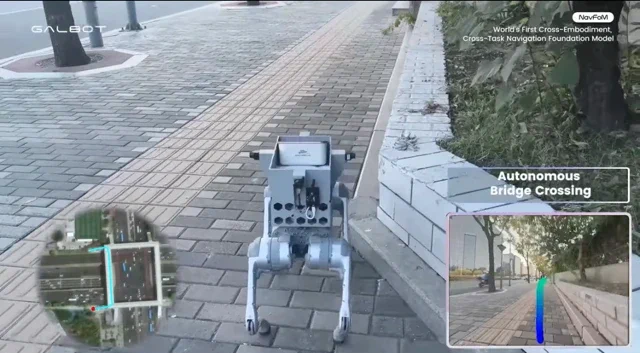
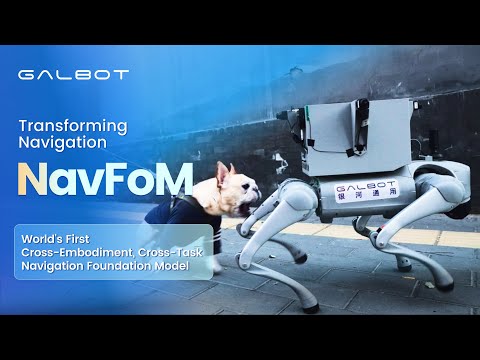
Researchers from Shanghai Jiao Tong University and SenseTime Research have just dropped a video showcasing NavFm, what they’re touting as the “world’s first cross-embodiment, cross-task navigation foundation model.” In plain English? They’ve built a universal “brain” for robot navigation that could, in theory, be plopped into any machine to help it get from A to B without a hitch. The demonstration features a generic robot dog that seems to have mastered the art of the urban obstacle course.
The quadruped deftly dodges pedestrians, stays locked onto a human target despite visual distractions, and even pulls off a multi-stage delivery task entirely on its own. Once it receives its mission, the bot autonomously plots a course across bridges, pavements, and up flights of stairs to reach its destination. It’s all rather impressive, showcasing a level of environmental awareness and task-based pathfinding that’s a massive leap beyond simple remote control or rigid, pre-programmed routes. Of course, navigating pristine footpaths in a polished demo video is one thing; surviving the chaotic reality of actual urban life is quite another—a lesson some autonomous delivery vehicles are currently learning the hard way. China's Robo-Vans: Unstoppable, Apparently
Why does this matter?
The real “secret sauce” here lies in those buzzwords: “foundation model” and “cross-embodiment.” Instead of painstakingly writing navigation logic for every new piece of hardware, a foundation model provides a generalised intelligence that can be adapted on the fly. Think of it as the difference between building a bespoke engine for every single car model versus inventing a universal sat-nav that works perfectly regardless of the vehicle you put it in.
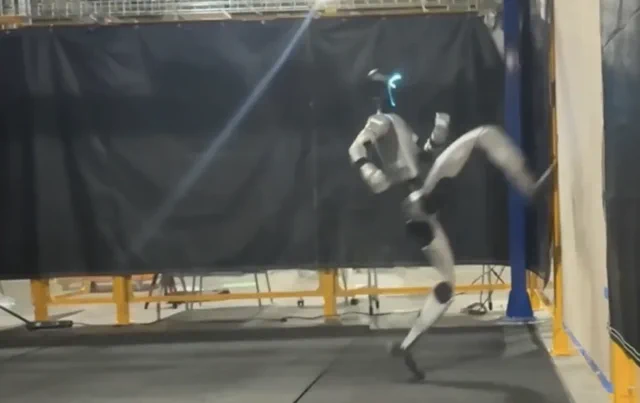
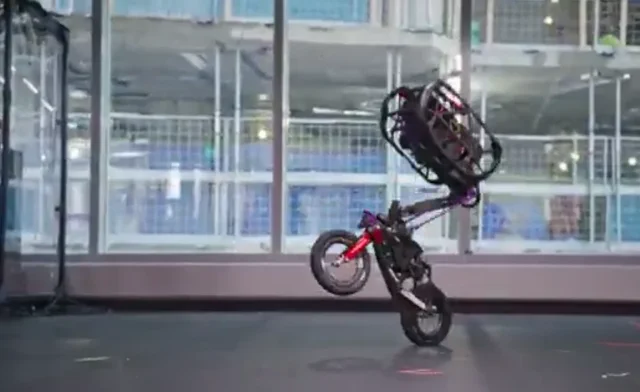
If NavFm’s claims hold water, the same core model guiding this metal mutt could potentially pilot a wheeled drone or even a humanoid with minimal fine-tuning. This would dramatically slash development times and could be a critical milestone in the race to create truly general-purpose robots capable of adapting to new bodies and unpredictable environments in an instant.