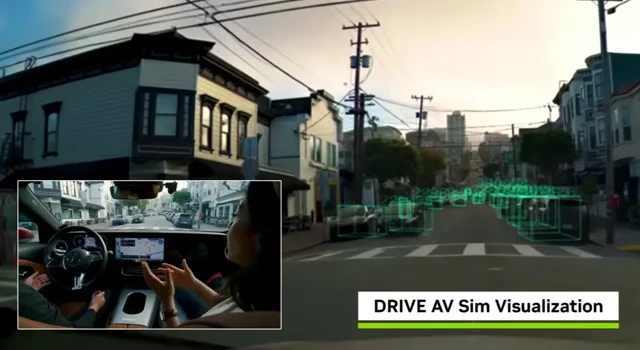
NVIDIA is finally letting its AI have a proper go behind the wheel on U.S. public roads. The company announced its DRIVE AV software will unveil its “address-to-address” L2++ autonomous driving capabilities in the all-new Mercedes-Benz CLA, expected by the end of this year. In a rather smashing new demo, the system navigated the glorious, often utterly bonkers, streets of San Francisco using only cameras and radar, a feat NVIDIA attributes to its dual-stack AI running on a processor capable of 254 trillion operations per second (TOPS).
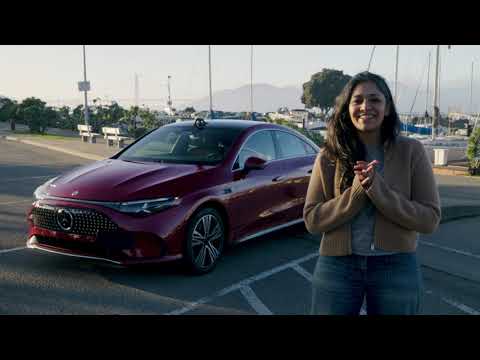
In the demonstration, NVIDIA’s VP of Autonomous Driving Software, Sarah Tariq, showed the system handling double-parked cars, unpredictable pedestrians, and unprotected left turns with a smoothness so eerily human, you’d swear it had a cuppa before setting off. The real magic, the ‘what’s-what’ under the bonnet, is a dual-stack architecture: a traditional, safety-first classical system runs in parallel with an end-to-end AI model trained on “countless hours of human driving” – probably more than your average Uber driver has seen in a lifetime. The car then decides on the path that’s both the safest bet and the most comfortable cruise, which, according to Tariq, is usually the one chosen by the AI. This entire operation runs on a single NVIDIA DRIVE AGX Orin system-on-a-chip, giving a rather pointed two fingers to expensive LiDAR and those perpetually past-their-sell-by-date HD maps.
The new CLA, one of the first cars built on the new Mercedes-Benz Operating System (MB.OS), recently bagged itself a rather spiffing five-star EuroNCAP safety rating. It pulled off an impressive 94% in Adult Occupant Protection and a solid 85% in Safety Assist systems, with the stellar performance of its NVIDIA-powered active safety features playing no small part in bagging that top-tier score.
Why Is This Important?
This marks a proper quantum leap toward the fabled “AI-defined vehicle.” By running on the new chip-to-cloud MB.OS platform, the system is designed for over-the-air (OTA) updates, meaning the car’s driving skills could theoretically get smarter while just sitting there, parked up in your garage, perhaps dreaming of a Sunday drive. NVIDIA isn’t merely cobbling together a fancy driver-assist; they’re crafting a perpetually evolving, brainy platform. The company is tapping into its rather clever “cloud-to-car” pipeline, using NVIDIA Omniverse to create digital twins of factories and run a frankly staggering million-plus virtual test replays every single day to validate software. This approach, which magically transmutes real-world miles into billions of simulated ones – talk about getting bang for your buck! – is how NVIDIA plans to scale its rather snazzy tech not just for Mercedes, but for a whole roster of partners like Jaguar Land Rover, Lucid, and Stellantis.