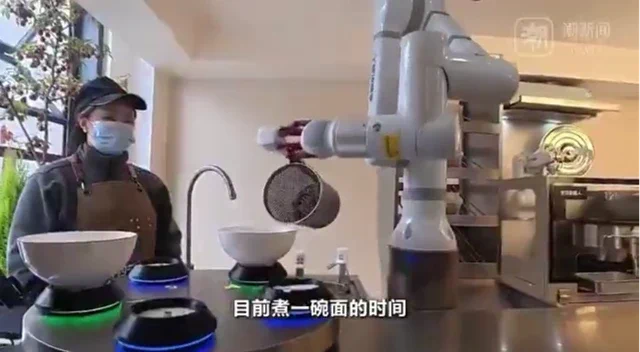
In the tech-forward city of Hangzhou, China, a new dining spot is making waves—and it’s not just because the kitchen staff consists of a dozen tireless automatons. The “24 Solar Terms AI Robot Restaurant” is turning heads with a blend of sci-fi efficiency and a surprisingly heart-warming social mission, all while serving up bowls of noodles for a mere £1.10, coffee for 65p, and ice cream for a pocket-change 35p. This isn’t some fleeting PR stunt; it’s a fully operational canteen where robots handle everything from the sizzle of the wok to the final mop-down.
The kitchen itself is a masterclass in automated precision. At the heart of the operation is a stir-fry bot that has been “taught” the nuanced techniques of professional chefs, capable of whipping up over 100 different dishes. Nearby, a dedicated noodle station churns out fresh, steaming bowls in just three minutes flat. The restaurant, which began its trial run in January 2026, also employs robotic arms for barista duties and autonomous cleaning bots that keep the floors spotless. According to local diners, the results are so spot on that most wouldn’t even guess their lunch was prepared by a machine.
However, the most compelling part of this venture isn’t the hardware—it’s the humanity it facilitates. The restaurant serves a dual purpose as a community dining hall for local senior citizens. By offloading the repetitive, back-breaking drudgery of commercial cooking to the robots, the human staff are liberated to focus on what actually matters: spending time with the elderly patrons, offering companionship, and rebuilding a sense of community that often gets lost in the digital age.
Why does this matter?
The Hangzhou experiment offers a refreshing counter-narrative to the “robots are coming for our jobs” anxiety that dominates the headlines. Rather than simple labour replacement, we are seeing a sophisticated model of labour redeployment. Automation takes care of the grunt work, allowing humans to lean into empathetic, high-touch roles that silicon and steel simply cannot replicate. As nations like China—and indeed the UK—grapple with the twin pressures of an ageing population and a shrinking workforce, this fusion of food-tech and social care feels less like a novelty and more like a blueprint for the future. It’s proof that the ultimate goal of automation needn’t be to cut humans out of the loop, but to elevate them to more meaningful work.