In a move that feels like it was lifted straight from a sci-fi blockbuster, Tesla, Inc. CEO Elon Musk has unveiled plans for an “Optimus Academy”. The vision? A sprawling, high-tech boot camp designed to train an army of humanoid robots, involving “millions of simulated robots” and “tens of thousands” of physical units in the real world. Musk detailed the ambitious roadmap during a recent sit-down with podcaster Dwarkesh Patel.
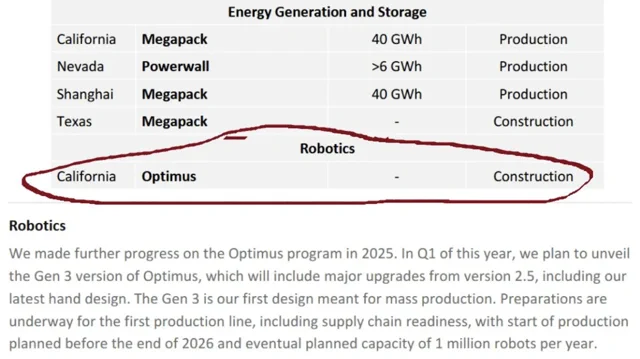
The initiative is a calculated attempt to solve a problem unique to humanoid robotics—one that Tesla’s Full Self-Driving (FSD) programme never had to grapple with: the data flywheel. While Tesla’s fleet of nearly 10 million customer vehicles serves as a constant stream of real-world driving data for the mothership, you can’t exactly fob off a clumsy, half-baked robot on a consumer and expect them to do the legwork. A humanoid robot is a vastly more complex beast, managing over 50 degrees of freedom—the latest hands alone boast 22—compared to a car’s relatively simple task of accelerating, braking, and steering.
According to Musk, the academy will see between 10,000 and 30,000 physical Optimus units engaging in “self-play in reality” to stress-test tasks and bridge the notorious “sim-to-real gap.” This gap is the bane of every roboticist’s existence; it’s the hurdle where skills mastered perfectly in a pristine, physics-based simulation often fail spectacularly when confronted with the messy, unpredictable nature of the real world.
Why does this matter?
Tesla’s “Optimus Academy” is essentially a brute-force solution to the single biggest bottleneck in general-purpose robotics: the colossal data deficit. While competitors are often stuck relying on slow, painstaking teleoperation to gather training data, Musk is proposing a vertically integrated data factory. By deploying tens of thousands of its own robots as “students,” Tesla can generate a proprietary dataset at a scale that no one else can currently touch. If this gamble pays off, it won’t just be about teaching a robot to fold laundry; it will create a scalable pipeline for training embodied AI, potentially handing Tesla an insurmountable lead in the race to build a truly useful humanoid worker.