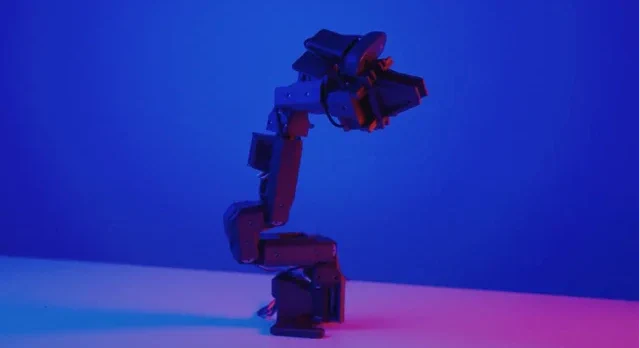
The eye-watering cost of entry for serious robotics research—traditionally measured in tens of thousands of pounds—has just been well and truly dismantled by the humble 3D printer. A project dubbed Norma-Core has gone public with ElRobot, a remarkably capable and “highly affordable” robotic arm that you can knock together yourself, provided you’ve got a 3D printer and can source a handful of off-the-shelf servo motors.
Norma-Core has shared the whole kit and caboodle on GitHub, providing a complete toolkit for any budding roboticist. The release includes everything from STEP and STL files for printing the components to ready-to-roll Bambu Lab projects, a proper step-by-step assembly manual, and those all-important URDF files required for simulation. The arm boasts an impressive 7+1 Degrees of Freedom (DOF), providing the sort of dexterity needed for the heavy lifting of physical AI research and imitation learning.
The design’s real genius lies in its accessibility. According to the creators, it requires “zero custom hardware.” That means no proprietary faff or impossible-to-find components; just download the blueprints, print the chassis, and integrate your own servo kit. This radically simplifies the supply chain, turning what was once a massive capital investment into a productive weekend project.
Why does this matter?
ElRobot represents a massive leap forward in democratising hardware for AI development. For decades, advanced robotic arms with 7-DOF or more were the exclusive playthings of well-funded university labs and corporate R&D departments. By open-sourcing a functional, high-fidelity design, Norma-Core is allowing independent researchers, students, and startups to experiment with physical AI on a shoestring budget. It effectively slashes the barrier to entry from the price of a shiny new motor to the cost of a few spools of filament and some electronics. Suddenly, your garden shed has everything it needs to become a world-class robotics lab.