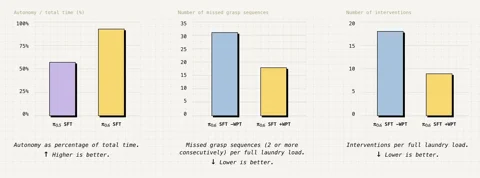
AI startup Physical Intelligence (π) has just put its latest foundation model, pi06, through the ringer in some properly messy, real-world environments—and the results are looking rather sharp. According to co-founder Sergey Levine, the model managed a staggering 92% autonomy while running a laundry-sorting robot and successfully boxed up 165 items per hour in a warehouse. It seems the long-promised dream of a “jack-of-all-trades” AI for robotics is finally shedding its sci-fi skin.
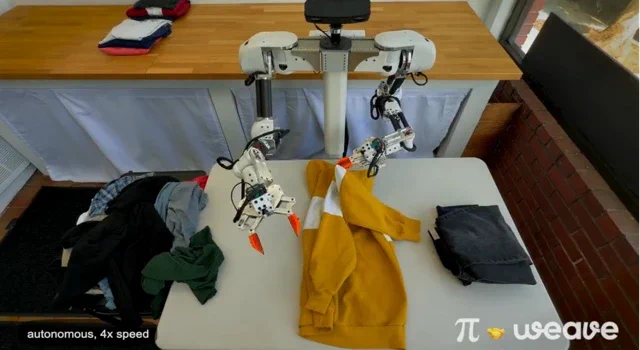
In a blog post shared on 24 February 2026, the company pulled back the curtain on its collaborations with two robotics firms to see how pi06 fares once it leaves the pristine safety of the lab. Partnering with Weave Robotics, Physical Intelligence deployed the model to oversee operations at Sea Breeze Cleaners. The system didn’t just cope; it thrived, running autonomously 92% of the time—a massive win given the unpredictable nature of a bustling dry cleaners. A second pilot with Ultra Robotics saw the pi06 model tackling warehouse fulfilment, hitting a clip of 165 items per hour with barely any human hand-holding required.
The latest performance data points to a significant leap in autonomy, with a noticeable drop-off in errors and the kind of “human-in-the-loop” interventions that usually plague these systems. For a startup with such lofty ambitions, this real-world proof of concept is the “smoking gun” they’ve been looking for.
Why does this matter?
Physical Intelligence isn’t trying to build the hardware; they’re building the “grey matter” that makes everyone else’s hardware actually work. The startup’s endgame is to establish a “Physical Intelligence Layer”—a foundational AI model that any developer can plug into, much like how software engineers use APIs instead of coding an entire operating system from scratch.
Right now, robotics firms have to spend a small fortune building their own bespoke control and perception systems. If Physical Intelligence can provide a reliable, off-the-shelf brain that handles the heavy lifting of robotic learning and execution, it could kickstart a revolution, deploying capable robots across every industry from healthcare to hospitality at breakneck speed.