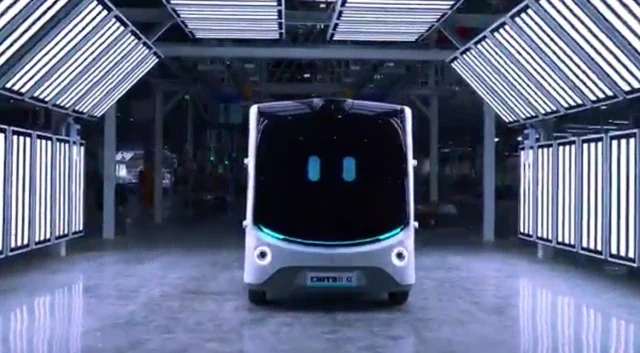
In a move that feels less like a dry corporate update and more like the opening sequence of a high-budget sci-fi epic, UBTECH Robotics Corp. has revealed that its subsidiary, UQI, has just rolled its first autonomous logistics vehicles off the assembly line. The Chitu α vehicle has successfully smashed its Production Validation Test (PVT) at a Foxconn New Energy Vehicle R&D Centre—a milestone that essentially signals the end of the dress rehearsals. We’re officially moving into the main event: mass production.
The achievement validates a sophisticated, automotive-grade manufacturing process—a closed-loop system managed within Foxconn’s notoriously slick smart manufacturing ecosystem. But the real clincher isn’t just another electric hauler joining the fleet. The announcement casually mentions a “new paradigm” in manufacturing, where UBTECH’s Walker S2 industrial humanoid robots are working hand-in-metal-hand with other autonomous mobile robots. Yes, you read that correctly: bipedal robots are now officially part of the automotive assembly crew.
This partnership between the robotics specialist and the manufacturing titan isn’t exactly new, but this is perhaps its most tangible result to date. The Walker S2 isn’t just high-tech window dressing; it’s part of a burgeoning trend where humanoids are being deployed for genuine heavy lifting on the factory floor. From quality inspection to complex material handling, these bots are clocking in at major manufacturing sites and proving they can hold their own.
Why does this matter?
This isn’t merely about making a warehouse slightly more efficient; it’s a full-blown proof of concept for the factory of the future. By clearing the PVT—a brutal testing phase designed to ensure every nut, bolt, and line of code is ready for the big leagues—UBTECH and Foxconn are laying out a viable, robot-integrated manufacturing blueprint. The collaboration marries Foxconn’s legendary manufacturing scale with UBTECH’s cutting-edge robotics to create a production line where humanoid robots tackle complex tasks that were, until very recently, the exclusive domain of humans. If this model scales, it won’t just change the factory floor; it’ll fundamentally redefine labour, efficiency, and the very nature of how we build complex machines.