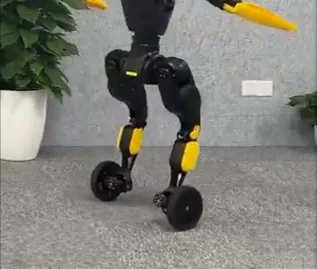
While the West remains bogged down in existential debates over AI ethics, China has decided to simply build the thing—and bankroll it into the stratosphere. In the first two months of 2026, the country’s humanoid robotics and embodied AI sector has hoovered up more than $5 billion (£4 billion) in funding. That isn’t a typo. Capital is flowing at an average clip of over $70 million (£55 million) per day, signalling a strategic tsunami aimed squarely at dominating the next generation of physical AI.
The sheer velocity of this investment is staggering. The first eight weeks of the year saw nine separate funding rounds exceeding RMB 1 billion (approximately £115m), eclipsing the six such deals recorded in the entirety of 2025. The headline act in this fiscal blitz is Galbot Robotics, which secured a massive RMB 2.5 billion (£280m) round on 2nd March, catapulting its valuation to the $3 billion mark. Crucially, the round was co-led by China’s national “Big Fund III,” the country’s heavyweight semiconductor investment vehicle. This marks the fund’s first-ever foray into an embodied AI firm—a move that screams “national strategic priority” louder than a drill sergeant on a Monday morning.
Why does this matter?
This isn’t just another venture capital bubble; it’s a calculated, state-endorsed industrial manoeuvre. The involvement of the “Big Fund”—an entity forged to secure China’s dominance in microchips—is the most telling signal yet. Beijing is now treating humanoid robotics with the same strategic gravity as semiconductors. The investment frenzy appears to have hit an inflection point in July 2025, when firms like Unitree Robotics and Agibot secured modest but significant commercial orders from China Mobile. That small taste of commercial viability seems to have convinced both the state and private investors that the era of theoretical play is over.
While Western firms generate headlines with slick, polished demos, China is quietly—or rather, quite loudly—laying the industrial and financial foundations to deploy humanoid robots at an unprecedented scale. The message is clear: the race for embodied AI supremacy isn’t just about clever algorithms; it’s about brute-force economic and industrial might. And right now, China has its foot flat to the floor.