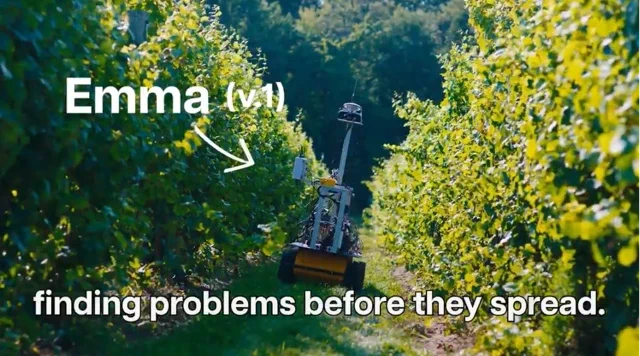
While the tech world remains fixated on bipedal robots performing clumsy pirouettes for the cameras, a far more practical revolution is quietly trundling through the vineyards of America. Jonathan Moon, a robotics heavyweight with a Google pedigree, has spent the past year perfecting Emma: an autonomous rover designed not to pick grapes, but to sniff out the diseases that kill them long before they’re even visible to the human eye.
The machine is the debut offering from Moon’s new ag-tech venture, Budbreak. According to a recent update from Moon, Emma is already putting in the hard yards across 14 vineyards and orchards in California and New York. Functioning as a high-tech “AI scout,” the robot meticulously scans every vine for the earliest whispers of viral infection and other biological threats, all while keeping a digital tally of crop yields. It’s a sharp pivot from Moon’s previous life developing robotics for strawberry fields at Google. As he wryly noted, “grapes have converted me from strawberries.”
Why is this important?
Emma is more than just a glorified, high-tech scarecrow; she is a critical linchpin for the future of precision agriculture. For viticulturists, disease is a relentless, wallet-draining nightmare that can ruin everything from the sheer volume of the harvest to the delicate profile of the final pour. By detecting these issues in their infancy, Emma allows farmers to intervene with surgical precision, salvaging crops and significantly bolstering the sustainability of their operations.
This kind of early-warning system is a genuine game-changer for the industry. Research from institutions like Cornell University suggests that advanced robotic monitoring could slash the need for pesticides by up to 90%—a staggering win for environmental stewardship. As chronic labour shortages and spiralling costs continue to squeeze the agricultural sector, autonomous solutions like Emma are rapidly shifting from futuristic curiosities to essential kit for the modern grower.