In a move that seems perfectly engineered to deprive developers of their beauty sleep, Shenzhen-based EngineAI Robotics Technology Co., Ltd. has officially pulled the curtain back on the Ultimate Robot Knock-out Legend (URKL). It’s a global humanoid fighting league boasting a winner’s cheque of ¥10,000,000 (roughly £1.1 million). But before you start looking for a blowtorch and a spare chassis in the garage, there’s a rather significant catch: the rules are strictly “non-violent.”
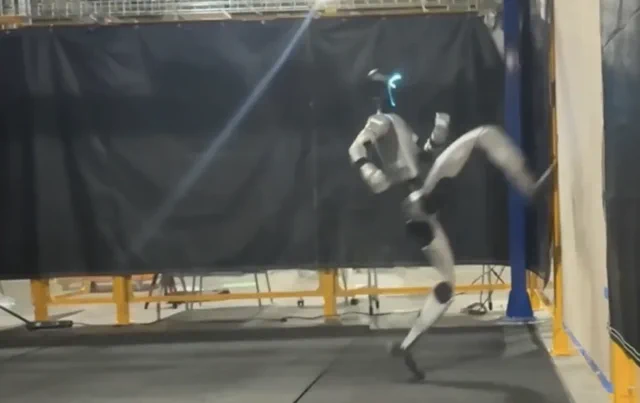
This isn’t your typical Sunday afternoon Robot Wars carnage. Instead of spinning blades and hydraulic flippers, this league is a high-stakes software showdown. All teams will compete using a standardised humanoid platform, the aptly named T800, meaning the battle will be won through superior code, more elegant motion control, and clever protective gear rather than raw destructive power. The T800, which stands at 5ft 8in (1.73m) and weighs in at 75kg, serves as the ultimate litmus test for balance and control algorithms under genuine duress.
The prize pool is hefty enough to make even the most comfortable Silicon Valley engineer reconsider their career path. The winner walks away with the ¥10 million grand prize, while second and third place pocket a tidy ¥2 million (£220,000) and ¥1 million (£110,000) respectively. As a proper incentive, any team that reaches the Top 16 gets to keep their T800 robot, and the Top 8 finalists are fast-tracked to final-round job interviews at EngineAI. Registration is open from 1 March to 30 April, with the global finals slated for December 2026 through January 2027.
Why is this important?
Let’s be clear: this is less about creating a new spectator sport and more about launching the world’s most intense, gamified recruitment and R&D programme. By standardising the hardware, EngineAI has cleverly pivoted the competition away from a resource-draining hardware arms race into a pure contest of software and AI ingenuity.
The URKL serves as a high-stress, real-world laboratory for the very technologies—balance, perception, and motion control—that are critical for deploying humanoid robots in factories or homes. Essentially, the company is crowdsourcing solutions to some of robotics’ most stubborn problems, dangling a life-changing prize, and securing a front-row seat to scout the world’s best talent. It’s a brilliant, if slightly cheeky, way to accelerate development while the rest of the industry is still stuck in the simulation phase.