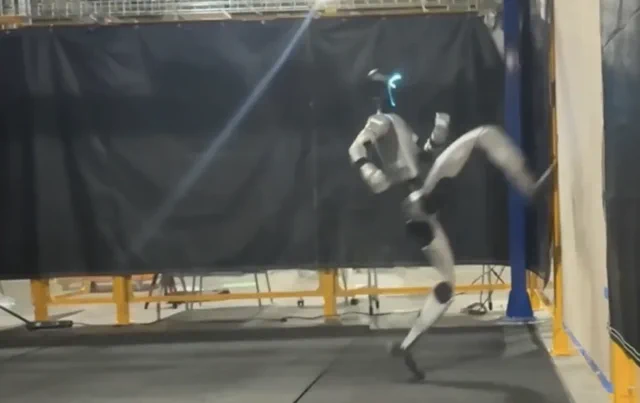
While the rest of the robotics industry is busy teaching humanoids how to fold laundry or brew a decent flat white, San Francisco’s Foundation Robotics is carving out a decidedly different—and significantly more rugged—niche. In a candid interview, founder Sankaet Pathak confirmed that the company’s Phantom humanoid is being groomed for the defence sector, with pilot programmes already making their way toward the front lines in Ukraine. It’s a sharp pivot away from the sanitised, “helper bot” future we’ve been sold, trading the living room for the battlefield.
Pathak isn’t interested in the “companion bot” trend currently favoured by his peers. His mission is to build “superhero” machines: robots capable of braving hostile environments, erecting critical infrastructure, and tackling the kind of high-stakes defence work that would break a human. According to Pathak, Foundation Robotics is now split roughly down the middle between commercial and defence contracts, with a laser focus on logistics, reconnaissance, and supply retrieval. This isn’t just theoretical, either; reports have confirmed that two Phantom MK-1 units were deployed to Ukraine in February to provide reconnaissance support in active zones.
The company’s engineering philosophy is built on sheer physical resilience. Pathak described a testing regime that forces the robot to walk “blind”—disabling its visual sensors and forcing its whole-body controller to rely entirely on reflexive balance. It’s the robotic equivalent of a human spinal cord taking over when you trip in the dark. This ensures the Phantom can navigate unpredictable terrain and survive heavy impacts—essential traits for any bit of kit destined for the chaos of a conflict zone.
Why does this matter?
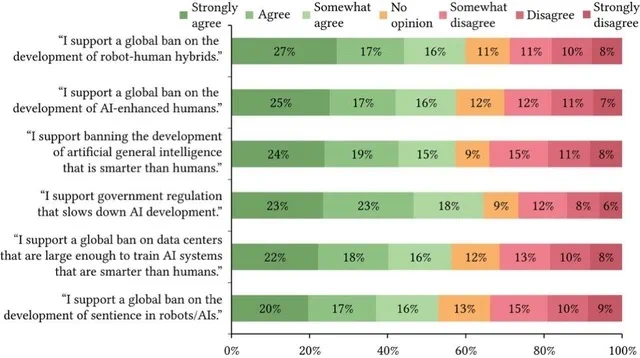
The explicit move into military applications by a humanoid robotics firm marks a watershed moment for the industry. While we’ve grown used to seeing drones and unmanned treads on the news, the arrival of a bipedal, human-sized machine on the battlefield brings a fresh set of ethical headaches. However, in environments built for humans but far too dangerous for them, these robots might find their first true “killer app.” Foundation’s trajectory suggests that the future of high-end robotics might have less to do with household convenience and everything to do with the grim, essential realities of defence and infrastructure in the world’s most unforgiving places.