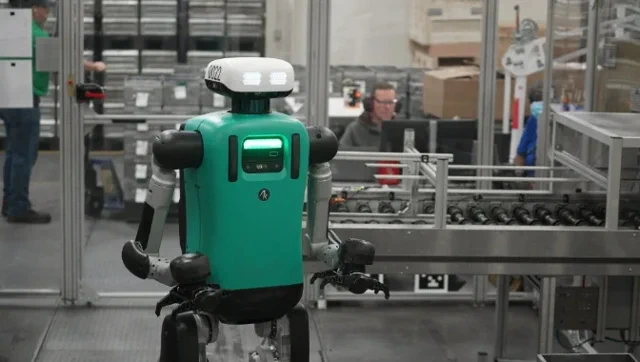
It turns out the robot revolution won’t involve a T-1000 hunting us down; it’ll mostly involve a very polite machine moving plastic bins with impeccable efficiency. Toyota Motor Manufacturing Canada (TMMC) has officially moved beyond the “getting to know you” phase, signing a proper commercial Robots-as-a-Service (RaaS) deal to deploy Agility Robotics’ bipedal Digit robots at its Woodstock plant in Ontario. The announcement, made on 19 February 2026, follows a successful year-long pilot program where the humanoids had to prove they were up to the job.
Standing at 5ft 9in and capable of lugging around payloads of up to 16kg, these robots won’t be hand-polishing the next RAV4 just yet. For now, their duties are focused on the essential, if slightly unglamorous, world of material handling. The first cohort of Digits will be tasked with loading and unloading totes from automated tuggers, feeding parts to the assembly line. It’s a move designed to take the literal heavy lifting off their human colleagues, improving ergonomics and keeping the factory floor humming.
This is far from a small-scale vanity project. Agility Robotics is currently ramping up production at its 70,000-square-foot RoboFab facility in Salem, Oregon, which the company claims will eventually churn out up to 10,000 Digit units a year. With the likes of Amazon and GXO Logistics already putting the bots through their paces, Agility is positioning itself as the premier supplier for bipedal labour.
Why does this matter?
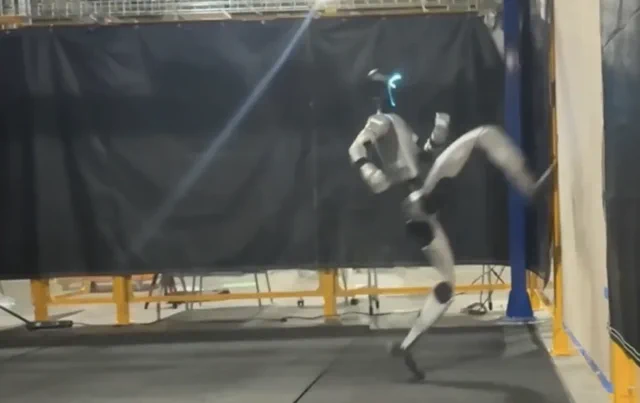
We’ve all seen the viral clips of humanoid robots performing backflips or dancing to Motown, but this is the real world. A commercial rollout by a manufacturing titan like Toyota—a company practically synonymous with the “gold standard” of production systems—is a massive vote of confidence. It’s a signal that bipedal robots are finally graduating from expensive R&D experiments to practical, line-item-justified tools that can help solve labour shortages. Crucially, because they walk like us, they can be dropped into existing factory layouts designed for humans without needing a total architectural overhaul. The age of the humanoid co-worker hasn’t just arrived; it’s already clocked in for the morning shift.