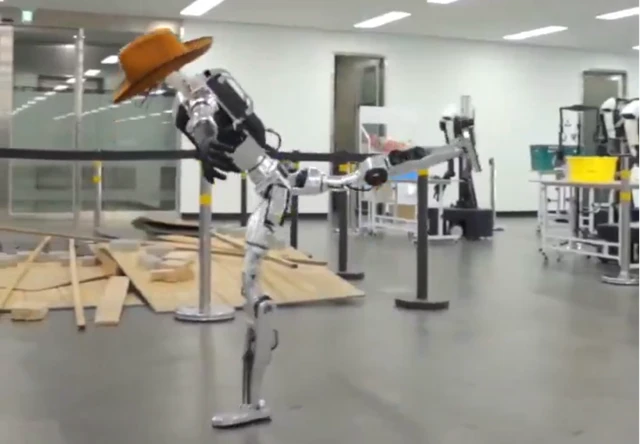
Just when you thought the humanoid robot market couldn’t get any more crowded, another heavyweight has stepped onto the pitch. South Korean robotics powerhouse ROBOTIS has pulled the wraps off the AI Sapiens, a new humanoid aimed squarely at the research community with one hell of a party trick: a price tag that won’t leave the finance department in tears.
Standing 4ft 3in (130 cm) tall and weighing in at 34 kg, the AI Sapiens boasts 23 degrees of freedom. But the real magic is happening under the bonnet, where it’s powered by the company’s brand-new Dynamixel-Q actuators. For those not steeped in robotics lore, ROBOTIS is legendary for its Dynamixel line of smart servos—the gold standard for builders for years. By leveraging its own world-class hardware, ROBOTIS is looking to deliver a serious research platform without the eye-watering “research-grade” budget. Better yet, the entire hardware platform is set to be fully open-source, a move clearly designed to foster a global developer ecosystem from day one.
Why does this matter?
The estimated price of £5,500–£6,800 ($7,000–$8,700) is a direct shot across the bows of competitors like Unitree. To put that into perspective, Unitree’s G1 humanoid starts at around £12,500 ($16,000), making the AI Sapiens an absolute steal for university labs and cash-strapped startups. While the Unitree R1 might have a lower entry point, the AI Sapiens is clearly gunning for the more sophisticated G1 research market.
By opting for a completely open-source hardware model, ROBOTIS isn’t just shifting units; they’re issuing an invitation. This strategy sidesteps the “black box” headache common with proprietary systems, allowing researchers to tinker, tweak, and truly get to grips with the machine they’re actually using. It’s a move that could significantly lower the barrier to entry for advanced physical AI research, putting high-end humanoid kit into the hands of a much broader audience. With a launch slated for the first half of 2026, the race to build the most accessible and capable research humanoid just got properly interesting.