Paris-based SquareMind has just secured a tidy $18 million in pre-Series A funding to roll out its AI-driven robotic system, Swan. The mission? To automate the painstakingly slow, and frankly error-prone, task of full-body skin checks for early melanoma detection. The round was spearheaded by Sonder Capital, a venture fund co-founded by medical robotics titan Fred Moll—the man behind the industry-standard Intuitive Surgical.
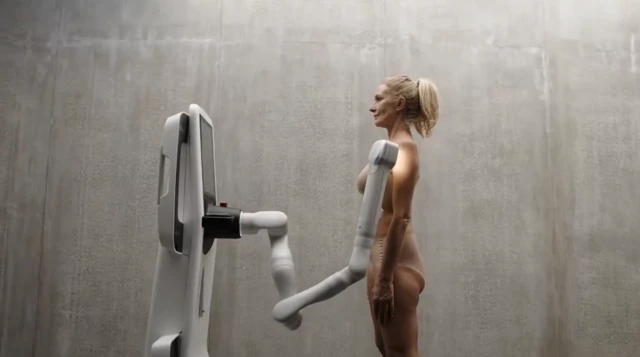
The Swan system is, in essence, a very polite and incredibly thorough robotic arm that snaps high-resolution, dermoscopic images of a patient’s entire skin surface. This contactless process, guided by a mix of audio and visual cues, takes mere minutes and establishes a comprehensive digital baseline of every single mole and freckle. This data is then crunched by an AI platform that helps dermatologists spot new or evolving lesions during follow-up visits—a vital feature, given that roughly 80% of melanomas are entirely new arrivals rather than changes to existing moles.
The company claims Swan is the first robot in the world to achieve this level of standardised, full-body imaging at a dermoscopic scale, effectively acting as an “augmented dermatoscope” for the whole body. This fresh injection of capital is set to drive SquareMind’s commercial rollout across the U.S. and Europe, where long waiting lists for specialist dermatologists are becoming a chronic headache.
Why does this matter?
Let’s face it: the current gold standard—a doctor peering at your skin and perhaps taking a few snaps on a digital camera—feels remarkably analogue in our high-tech era. SquareMind is addressing a dual challenge of scale and precision. Dermatologists are stretched thin, and human memory is notoriously flaky. By generating a time-series, high-definition “digital twin” of a patient’s skin, the Swan robot offers objective, trackable data that doesn’t rely on a clinician remembering exactly what a mole looked like six months ago.
Crucially, this isn’t about making doctors redundant; it’s about giving them better tools for the job. Research indicates that while AI on its own can hold its own against dermatologists in spotting melanoma, AI-assisted clinicians achieve far higher levels of sensitivity and accuracy. By automating the grunt work of documentation, SquareMind’s system lets specialists focus on the high-stakes diagnostic calls. It’s a classic example of robotics and AI augmenting human expertise to save lives through earlier, sharper detection.