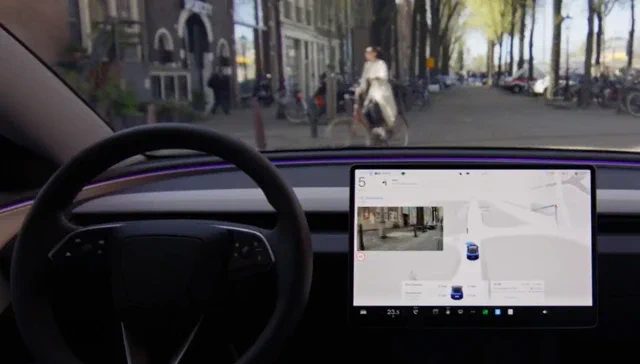
Tesla, Inc. has finally scaled the ramparts of European regulation, clinching its first-ever approval to deploy its Full Self-Driving (Supervised) software in the Netherlands. The announcement, made on 10 April 2026, confirms that Dutch Tesla owners will be the first on the Continent to gain access to the advanced driver-assist system—a feature that has been a staple of North American roads for years. However, a closer look at the fine print suggests this is less of a ‘Robotaxi’ revolution and more of a strictly chaperoned debut.
The Dutch vehicle authority, RDW (Rijksdienst voor het Wegverkeer), has granted what it calls a “European type approval with provisional validity in the Netherlands” following a gruelling 18-month evaluation. The RDW was quick to dampen any autonomous hype, stating unequivocally that a vehicle equipped with FSD Supervised is not self-driving. Legally, it remains classified as a Level 2 driver-assist system, meaning the human behind the wheel remains fully responsible and must be ready to take over at a millisecond’s notice.
In its announcement, Tesla claimed, “No other vehicle can do this.” This is, to put it politely, a touch of classic Silicon Valley hyperbole. The RDW itself pointed out that other manufacturers, such as BMW and Ford, have already secured approvals for similar hands-off driving systems in Europe. This approval places FSD Supervised under the same strict regulatory framework as its rivals, requiring constant driver monitoring via in-car sensors to ensure total attentiveness.
Why does this matter?
This approval is a significant, if incremental, victory for Tesla. It establishes a vital regulatory toehold in the notoriously cautious European market, which operates on a “type approval” basis—a far cry from the “self-certification” model used in the United States. While the Dutch green light doesn’t automatically grant Tesla a free pass across the entire EU, it creates a clear pathway for other member states to recognise the certification. A broader European rollout could be on the cards by summer 2026.
Ultimately, the Netherlands has become the official proving ground for FSD in Europe. The “provisional” nature of the approval means that regulators will be watching the data like a hawk. For Tesla, this is the chance to prove its system can navigate the unique chaos of European infrastructure. For drivers, it’s a chance to experience the cutting edge of assist tech—provided they remember they are still very much in the driving seat. As the RDW explicitly warned: don’t think about catching up on the morning papers while on the move. The future of mobility may have arrived in the Low Countries, but for the foreseeable future, it remains very much under human supervision.