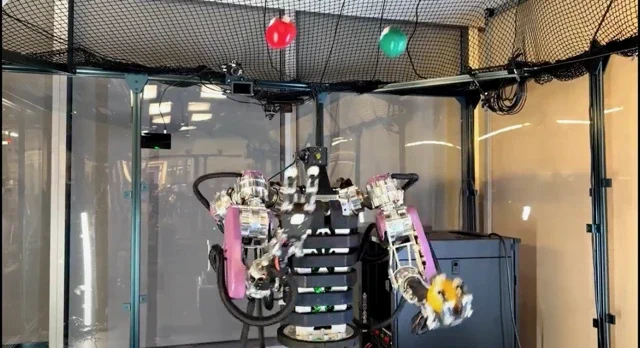
In a move that feels less like a product launch and more like firing a cannonball directly at the hull of the robotics industry, Unitree Robotics has unleashed its G1 humanoid robot with a starting price of just $16,000 (roughly £12,500). That isn’t a typo. For less than the price of a mid-range hatchback, you can now own a bipedal robot that can trot along at 2 metres per second (about 4.5 mph) and, rather brilliantly, fold itself up into a compact bundle for easy storage. The robot revolution won’t be televised; it’ll be delivered to your doorstep in a surprisingly small box.
The G1 isn’t some towering metal titan; it stands at a modest 127cm (about 4ft 2in) and tips the scales at around 35kg. It’s more “precocious child” than its hulking, $90,000 (£70,000) older sibling, the H1. But don’t let its diminutive stature fool you. The base model boasts 23 degrees of freedom, 3D LiDAR, and depth cameras for vision, all powered by a battery with a two-hour runtime. For the power users, Unitree is also offering an “EDU” version with up to 43 degrees of freedom, beefier joints, and an optional NVIDIA Jetson Orin module—perfect for developers who want to do more than just show off to their mates.
Why is this a big deal?
The G1’s price point is a seismic shock to the fledgling humanoid market. While Tesla is aiming for a sub-$30,000 price for Optimus and Agility Robotics’ Digit can set you back upwards of $250,000, Unitree has bypassed the speculation and delivered a functional machine at a fraction of the cost. This isn’t just about making robots cheaper; it’s about making them democratic.
By pricing the G1 this aggressively, Unitree is positioning itself as the de facto platform for research labs, universities, and startups that were previously priced out of the advanced robotics game. While the G1 might lack the raw muscle or the uncanny AI polish of its pricier rivals from Figure AI or Boston Dynamics—at least for now—it provides a “good enough” hardware foundation for a massive community of developers to start tinkering. This could accelerate software development at a breakneck pace, potentially handing Unitree an unassailable lead before the competition has even settled on a retail price. The era of the bedroom humanoid developer has officially arrived.