In the perpetually feverish world of humanoid robotics, throwing down a gauntlet on social media has become something of a rite of passage. But when Figure AI CEO Brett Adcock stepped up to the plate, he didn’t just promise future glory—he claimed the future is already clocking in. Responding to a challenge from robotics veteran Scott Walter, who demanded proof of a full eight-hour autonomous work shift, Adcock coolly replied, “We already do this every day at Figure.” When pressed to “Prove it,” Adcock’s retort was delightfully succinct: “Texting the film crew, livestream tomorrow.”
For those who haven’t been keeping tabs on the corporate drama, Figure AI is the venture-backed darling of the robotics world, aiming to plant humanoids in every warehouse and factory on the planet. Armed with a formidable war chest from heavyweights including OpenAI, Microsoft, NVIDIA, and Jeff Bezos, Figure has been moving at a blistering pace. The company has already inked a landmark partnership to deploy its machines at a BMW manufacturing plant in South Carolina, shifting its focus from the lab to the factory floor.
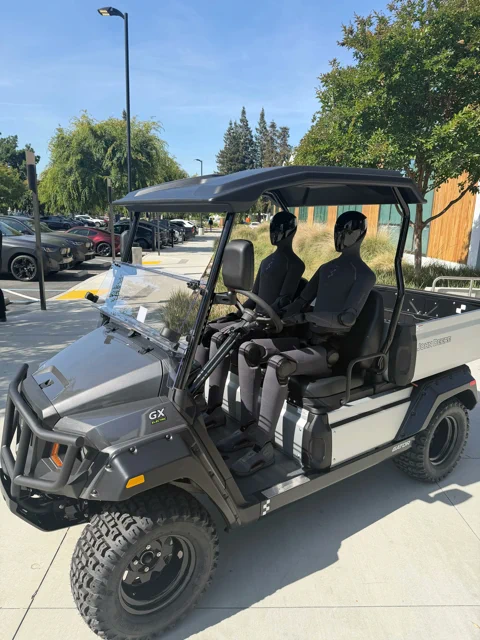
The challenge came from Scott Walter, a simulation pioneer who co-founded Deneb Robotics back in 1985 and remains a respected, if pointed, voice in the industry. His assertion that humanoids have “limited utility” until they can survive a full shift without human intervention is a widely held view. Adcock’s claim that Figure’s bots—powered by end-to-end neural networks developed in tandem with OpenAI—have already cleared this hurdle is audacious, to say the least. While they’re prepping the livestream, it seems some of the robots are already hitching a ride to their next shift.
Why is this important?
An eight-hour, intervention-free autonomous shift is the commercial holy grail for humanoid robotics. It is the line in the sand that separates a phenomenally expensive tech demo from a viable, scalable workforce. Achieving this requires more than just sophisticated AI that can reason and adapt; it demands extreme hardware reliability and a solved power-management strategy—given Figure’s robots have a stated runtime of about five hours, this implies a slick hot-swapping or rapid-charging system must be in play.
This isn’t Adcock’s first endurance claim; in 2025, the company reported a 20-hour continuous run at the BMW plant, though details on the level of autonomy were thin on the ground. This new claim, however, hinges on full autonomy driven by advanced AI. The entire industry will be glued to this promised livestream. If Figure pulls it off, they aren’t just validating their tech; they’re firing the starting pistol on the commercial humanoid era. If they don’t, well, the internet has a notoriously long memory. No pressure, then.