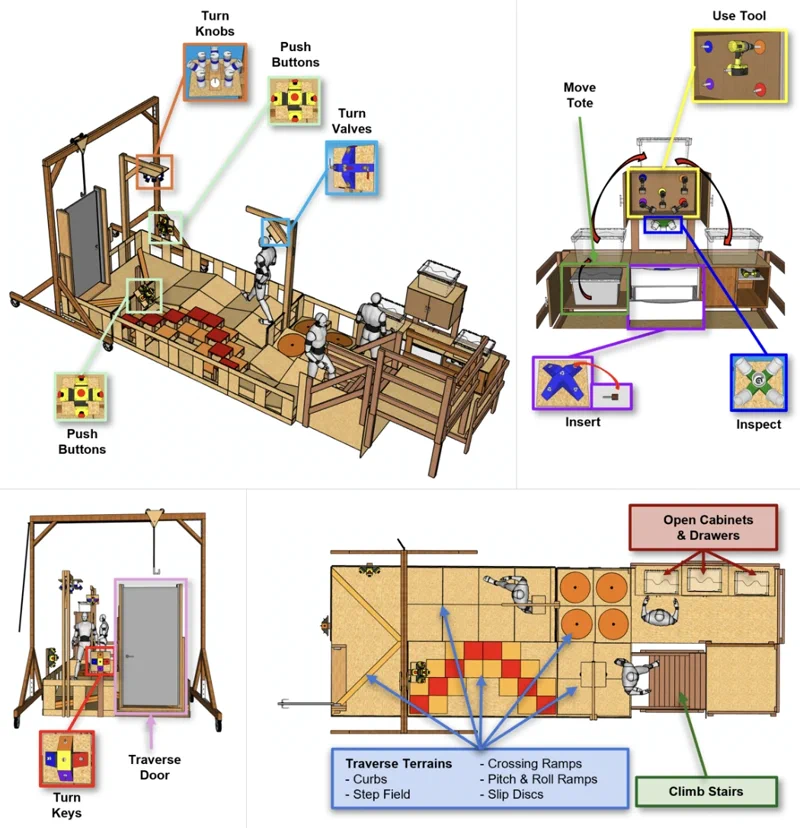
The U.S. National Institute of Standards and Technology (NIST) has decided it’s high time we saw whether the latest crop of shiny humanoid robots can actually walk the walk, rather than just starring in glossy, over-edited showreels. The agency has proposed a new “Baseline Performance Benchmark”—essentially a standardised assault course designed to put real-world capabilities to the test, nearly a decade after the DARPA Robotics Challenge (DRC) last gave these machines a proper, and often humbling, workout.
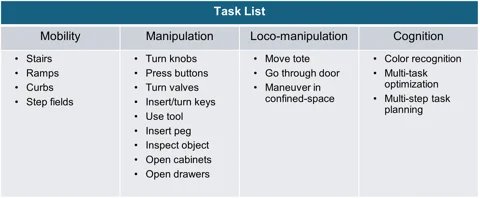
Back in the mid-2010s, the DRC provided us with a goldmine of robotic slapstick and a stark reminder that tasks as simple as turning a door handle were, in fact, a total nightmare for a pile of sensors and servos. NIST, the brains behind those original trials, is now pitching a modern-day successor. The aim is to establish a universal bar for what any self-respecting commercial humanoid should be able to pull off. The proposed gauntlet spans four key domains: Mobility (clambering up stairs and ramps), Manipulation (fiddling with knobs and tools), Loco-manipulation (the tricky art of lugging a crate through a doorway), and Cognition (actually planning a multi-step job without a human holding its hand).
NIST is cooking up the test apparatus alongside industry heavyweights and plans to dish out a limited number of these physical testbeds for free to participating U.S. robot manufacturers. The agency is currently canvassing the robotics community for feedback, effectively asking the likes of Boston Dynamics, Figure AI, and Tesla to help build the very ruler they’ll be measured by.
Why does this matter?
For far too long, the robotics game has been a contest of who has the best video editor. We’ve been fed a steady diet of flawless demos performed under studio conditions, with no objective way to tell if one bot is actually better than its rival. It’s left investors and potential customers playing a guessing game over who has real substance and who is just selling “smoke and mirrors.” This NIST benchmark could finally be the thing that cuts through the fluff.
By establishing a repeatable, measurable set of hurdles, NIST is levelling the playing field. It will allow for a proper, apples-to-apples comparison, separating the genuine contenders from the expensive lab-bound prototypes. For an industry that’s supposedly on the verge of going mainstream, this kind of cold, hard data isn’t just a “nice to have”—it’s vital for building trust and ensuring we aren’t just buying into a very expensive dream. You can dive into the nitty-gritty in the official proposal.