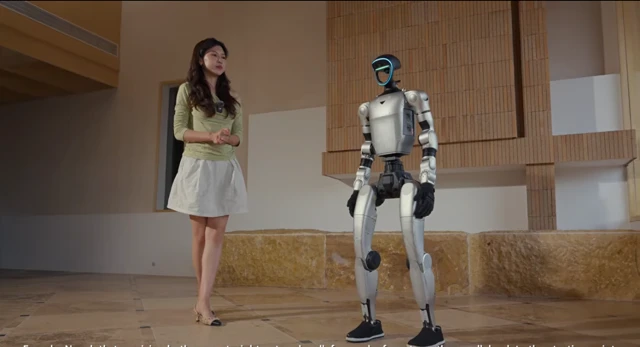
In the never-ending parade of clanking servos and carbon-fibre limbs, Unitree Robotics has just elbowed its way to the front of the pack. The firm has dropped a new video showcasing its G1 humanoid robot responding to verbal commands—not by triggering some pre-baked animation, but by generating its actions in real-time. Crucially, Unitree is making a point of the fact that the footage was captured in a single, uncut take; a cheeky dig at the heavily airbrushed, Hollywood-style demos that have become the norm in the robotics industry.
The clip features the G1 being put through its paces with a series of random requests, ranging from “show me a cool move” to the slightly more tragic “I’m a bit sad, can you comfort me?” Before every manoeuvre, the robot chirps, “Please wait a moment, I’m thinking”—a phrase that serves as both a literal indicator of its processing cycles and a mood we can all relate to on a drizzly Monday morning. Unitree is refreshingly upfront about the current rough edges, admitting that real-time AI generation still suffers from “slight latency” and a “somewhat reduced” fluidity.
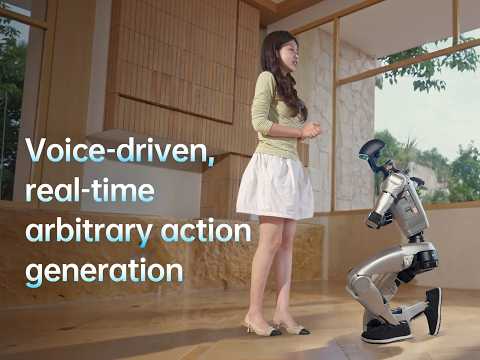
This is more than just a clever party trick. The G1, which Unitree is pitching as a “Humanoid AI Agent,” represents the vanguard of a new generation of robots. These aren’t just mindless drones built for a single task on an assembly line; by baking in large-scale AI models, these machines are learning to perceive, interpret, and navigate the world in a general-purpose way. It’s the leap from a robot that can only tighten one specific bolt to one you can simply tell to “grab me that spanner.”
Why does this matter?
Unitree’s latest demo is a loud-and-clear signal that the industry is pivoting hard from rigid, pre-programmed automation to flexible, AI-driven “embodied agents.” While the likes of Figure AI and Tesla are sprinting to solve the same puzzle, Unitree is doing it with a characteristically aggressive price tag. The G1 agent model is priced at around $16,000 (roughly £12,500), which is a mere fraction of the cost of rival advanced humanoids.
Naturally, that sticker price is likely aimed at the domestic Chinese market and will almost certainly get a bump for UK and international buyers. Nonetheless, by making the hardware this accessible, Unitree is opening the floodgates for researchers and devs to tinker with the complex software required to make these machines actually useful. What we’re seeing isn’t a flawless, polished performance, but something far more compelling: a relatively affordable, thinking machine that’s learning on the job, one slightly stuttery step at a time.