In the high-stakes arena of humanoid robotics, a philosophical rift is opening up. On one side, AI heavyweights like NVIDIA are championing “Design for Simulation” (DFS)—the principle that hardware should be purpose-built to play nice with the digital environments where AI learns to move. On the other, a veteran roboticist has just branded the entire movement “S.T.U.P.P.I.D.”
The broadside comes from Dr Scott Walter, a simulation engineer with four decades of experience and the co-founder of two robotics simulation firms. In a scathing critique, Walter argues that letting the limitations of software dictate the physical capabilities of hardware is a dangerous, regressive trend. To drive the point home, he’s coined a biting new backronym: S.T.U.P.P.I.D., or Simulation Throttled Underperforming Product Integration Design.
This is a direct shot across the bow of the philosophy spearheaded by figures like Dr Jim Fan, a Senior Research Scientist at NVIDIA. Fan has long maintained that for modern Reinforcement Learning (RL) to scale, hardware and simulation must be developed in lockstep. “If your robot doesn’t simulate well, you can kiss RL goodbye,” Fan has stated, effectively positioning simulation as the primary stakeholder in the design process.
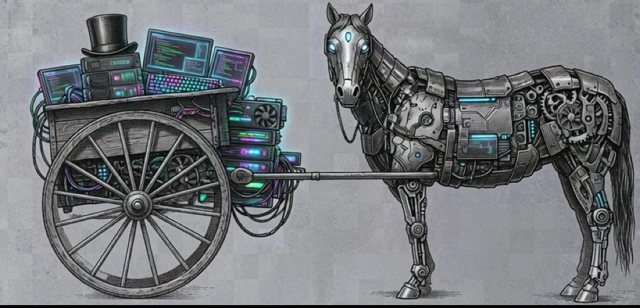
Walter, however, contends that this is a classic case of putting the cart before the horse. He points to specific examples of “nerfed” engineering, such as Unitree Robotics allegedly swapping out the sophisticated parallel ankle joints on its G1 model for a simpler, serialised design on the new H2 humanoid—a move supposedly made to be more “RL friendly.” Other casualties of this trend include the abandonment of complex, tendon-driven hands and the artificial throttling of smart motors to produce a more linear, “sim-friendly” response.
According to Walter, engineers are so terrified of the “sim-to-real” gap that they are bending physical reality to fit the simulation, rather than forcing the simulation to catch up with the complexities of the real world.
Why does this matter?
This isn’t just an academic spat; it’s a debate over the very soul of robotics. If the “simulation-first” school of thought wins out, the industry risks birthing a generation of robots that are easy to train but fundamentally less capable, efficient, or robust than they ought to be. It prioritises the convenience of the software developer over the raw performance of the machine.
Walter’s critique serves as a call to arms for engineers to sharpen their simulation tools rather than “dumbing down” their hardware to suit current software limitations. As he pithily puts it: “We don’t design bridges to make the structural analysis software happy.” The ultimate goal should be to build the best possible robot, not just the one that looks best in Isaac Sim. True innovation happens when we ask what the robot needs to do, not what the simulator can handle.