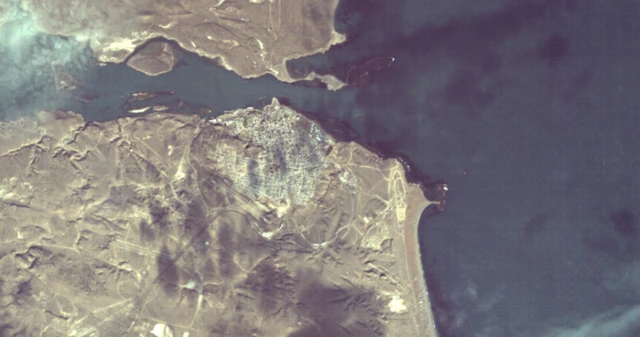
In a breakthrough that feels both inevitable and properly sci-fi, an Earth-observation satellite has, for the first time, tracked down its target entirely on its own. The mission, which took place in April aboard Loft Orbital’s YAM-9 spacecraft, represents the first recorded deployment of a vision-language model (VLM) in orbit. It’s a move that effectively emancipates the satellite from its constant reliance on human analysts back on the ground. This isn’t just a bit of clever code; it’s a seismic shift in what space-based sensors are actually capable of.
The satellite was running Google DeepMind’s Gemma 3 model, an AI specifically tailored for “edge” environments where processing power is at a premium—like, for instance, a metal box screaming through the vacuum of space at several kilometres per second. The demonstration was powered by an NVIDIA Jetson Orin AGX GPU and orchestrated by a software package from NASA’s Jet Propulsion Laboratory. Rather than the traditional, painstaking process of beaming terabytes of raw imagery back to Earth for harried analysts to comb through, YAM-9 was fed natural language queries—such as “identify infrastructure around railway hubs”—and the onboard AI handled the triage, flagging only the relevant data.
miért fontos ez?
This demonstration effectively transforms satellites from “dumb” cameras into proactive, autonomous scouts. By processing data at the source, it bypasses the monumental data logjam that usually plagues satellite operations. More profoundly, it paves the way for what Loft’s Head of AI, Paul Lasserre, describes as “always-on, patrol layers in space.” Instead of tasking a satellite to simply snap a photo, operators can issue persistent commands like, “Monitor this border and alert me the moment you see something dodgy.” it is the first step toward a future where our space infrastructure isn’t just collecting data, but actively making decisions.