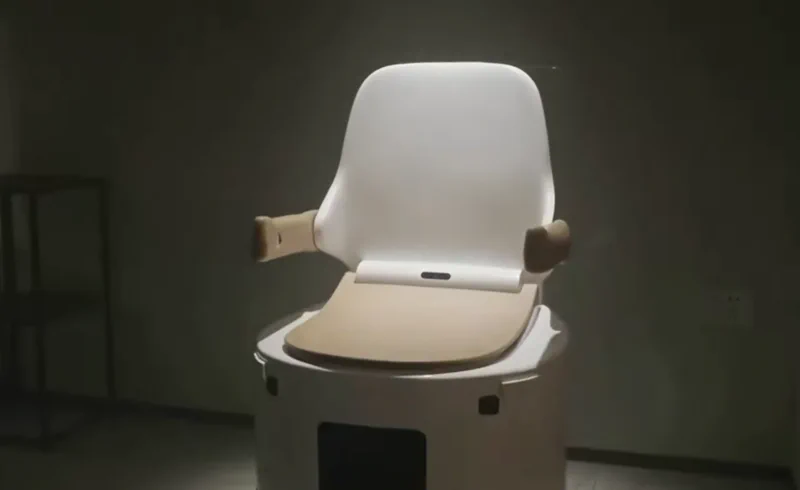
In the ever-expanding universe of “robots designed to tackle the jobs you’d really rather avoid,” a new contender has rolled onto the scene. Chinese tech firm Yueban has pulled the wraps off the Xiaoban, an intelligent toilet robot that takes the “smart home” concept to its logical—if slightly surreal—conclusion: it drives itself right to your bedside. It’s a complete reversal of the age-old “trip to the loo”; now, the loo comes to you.
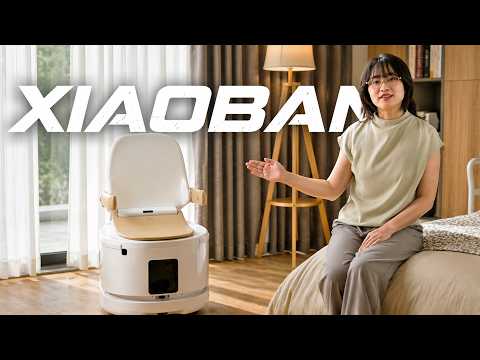
Unveiled at the 2026 Shanghai International Elderly Care Expo, the Xiaoban is far more than just a glorified commode on wheels. Once the user has finished their business—and yes, it’s engineered to handle the lot—the device kicks into gear with a full bidet wash and warm air dry. To keep things pleasant, it employs a heavy-duty odour-neutralising system, featuring a foam shield and activated charcoal filters to ensure the room stays fresh. In China, it’s hitting the shelves at ¥28,999, which is roughly £10,500. International pricing is still very much up in the air.
The clever bit happens once the user is safely back in their chair or tucked into bed. Guided by a sophisticated sensor suite including LiDAR and lasers, the Xiaoban navigates its way to a dedicated docking station that hooks into the home’s existing plumbing. It then extends a disposal arm, flushes its contents through a low-noise grinder to prevent any “dodgy” blockages, and initiates a rigorous 360-degree self-sanitising cycle. To finish the job, it tops up its own clean water tank and recharges its battery, ready for the next call of duty.
Why is this important?
Beyond the initial “only in the future” shock value, the Xiaoban represents a serious attempt to tackle one of the most difficult challenges in elder care: preserving personal dignity while reducing the immense physical and emotional strain on carers. For a price tag that rivals a decent second-hand car, it offers a fully automated, contactless solution to an essential but sensitive part of daily life. While the cost will be a barrier for many, it signals a shift towards a future where robotics provide genuine autonomy for an ageing population, handling tasks that are as vital as they are unpleasant.