In the relentless march toward general-purpose robots, the hands have always been the sticking point—the clumsy, rigid Achilles’ heel of the humanoid world. Now, 1X Technologies, Inc., the robotics outfit famously backed by OpenAI, has unveiled a new pair of hands for its NEO humanoid that might just have cracked the code. Boasting a staggering 25 degrees of freedom (DoF), these new appendages demonstrate a level of dexterity and raw strength that feels almost unnervingly close to human capability.
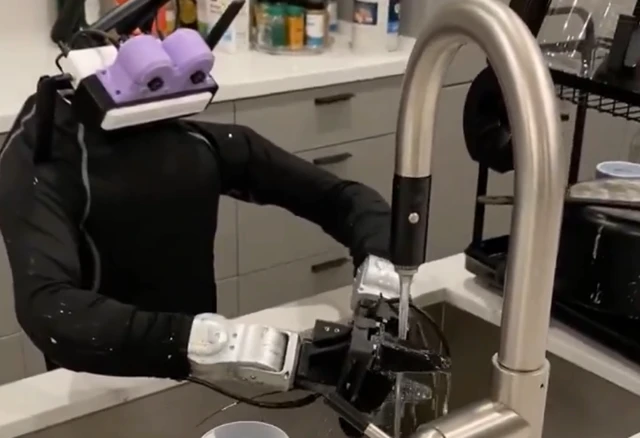
The company’s latest demonstration is a bit of a showstopper, ticking off a laundry list of tasks previously confined to the realms of sci-fi. We see NEO delicately assembling LEGO sets, pouring a proper cuppa, handling tools with ease, and even finessing a credit card. Under the bonnet, the hands are a marvel of engineering, featuring a closed-loop, tendon-driven system with motors housed in the forearm to keep the design lightweight yet punchy. They also pack high-resolution tactile sensing for pressure and contact location, allowing for the kind of nuanced “in-hand” manipulation that usually leaves robots fumbling. And for those messy real-world jobs? They’re IP68 rated, meaning they are fully dust-tight and can be submerged in water—making NEO that rare breed of robot that can actually wash its own hands.

The spec sheet is nothing short of brilliant: 22 actuated joints in the fingers and palm, a 3-DoF wrist, and enough grunt to lift a 9kg (20lb) kettlebell. The materials are food-safe, and the entire system has been put through its paces over millions of continuous test cycles. 1X, which originally found its feet in 2014 as Halodi Robotics, has been methodically building towards this moment, securing a $100 million Series B round earlier in 2024 to scale up production of its humanoids.
Why is this important?
This isn’t just about building a better robot hand; it’s about unlocking the potential of a better robot brain. 1X states the primary goal is to smash through the “hardware ceiling” that has long throttled the progress of physical AI. More dexterous, robust hands can perform a far wider variety of tasks, which in turn generates a massive stream of high-quality, real-world manipulation data. This data is the lifeblood for training the complex world models and embodied AI that will eventually allow robots like NEO to learn and operate entirely on their own. In essence, 1X hasn’t just given its robot better hands—it has built a superior data-gathering platform to accelerate the arrival of truly useful, general-purpose humanoids.