In a move that might one day see the surgeon’s preternaturally steady hands replaced by silicon and steel, the startup Aleph Surgery has broken cover with a $7.5 million (£5.8 million) pre-seed funding round. The investment was spearheaded by venture capital titan Andreessen Horowitz (a16z), with backing from a “who’s who” of firms including BoxGroup and Valkyrie Ventures. The company’s audacious mission? To develop the world’s first truly autonomous surgical robot—one that doesn’t just follow orders, but learns from demonstration and evolves with every procedure.
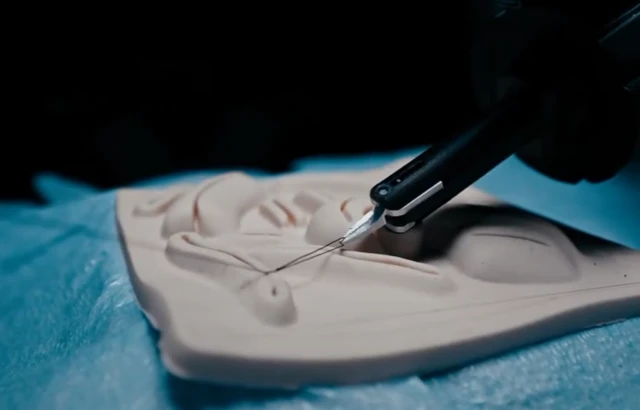
Aleph’s vision, as articulated by co-founder Ryan McGuire, takes aim at the chronic shortage and eye-watering costs of surgical expertise. Unlike the current crop of robotic systems, which are essentially high-end, teleoperated joysticks, Aleph is engineering a system capable of “acquiring, refining, and transferring surgical skills across millions of procedures.” A video released alongside the announcement shows the company’s “v1” prototype already teaching itself how to suture—a foundational, yet incredibly delicate, surgical task.
The startup is diving headfirst into one of the most highly regulated and valuable forms of labour on the planet, betting that “Physical AI” can do for the operating theatre what software did for information. It’s a long-term play; they’re looking to create a scalable surgeon in a world where training a human takes over a decade and costs a small fortune.
Why should we care?
This isn’t just another robotics startup looking to pack boxes in a warehouse; it’s a direct assault on the pinnacle of human manual dexterity and professional expertise. While the lion’s share of “Physical AI” investment has been funnelled into logistics and manufacturing, Aleph is setting its sights on the operating room—a high-stakes environment where there is zero margin for error.
If successful, this venture could represent a total paradigm shift in healthcare, potentially democratising access to world-class surgical care, regardless of where you happen to live. However, the road ahead is littered with technical, ethical, and regulatory hurdles that make autonomous driving look like child’s play. Still, with a hefty pre-seed round and the backing of top-tier investors, Aleph Surgery has the capital to start stitching together its vision for the future of medicine. The tech world will be watching closely to see if it can truly cut it.