For years, the robotaxi revolution felt like a party happening exclusively in the glitzy hubs of the US and China. Now, Europe has finally made it onto the guest list, though the invitation comes with a classic British caveat: you’re still expected to bring a designated human driver. In a sudden burst of momentum, commercial autonomous ride-hailing has officially hit the streets of Zagreb and London, while Tesla, Inc. continues its steady march across the continent with a fresh regulatory win in Slovenia.
The title of “Europe’s first commercial robotaxi service” was snatched up by Pony.ai in a tie-up with Verne and Uber. Operations kicked off in Zagreb, Croatia, back in April 2026, but the service truly went live for the masses on 19 August, allowing locals to hail a self-driving car across a 90-square-kilometre zone via the Uber app. Not to be outdone, London joined the scrum on 3 September. British scale-up Wayve teamed up with Uber to launch its own pilot, deploying a fleet of 15 all-electric Ford Mustang Mach-Es. However, in both cities, the “autonomous” label carries a heavy asterisk: a trained safety operator remains bolted to the driver’s seat, ready to step in if the AI gets cold feet.
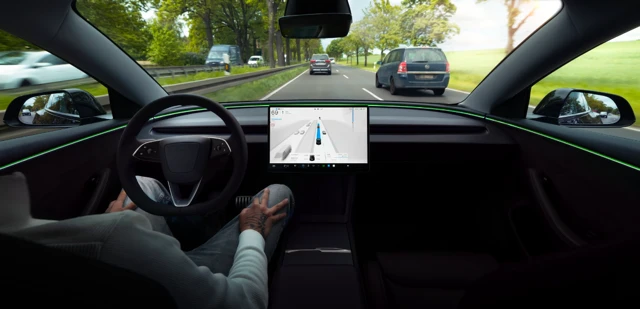
While geofenced robotaxis crawl forward, Tesla is playing a different game entirely. On 8 September 2026, Elon Musk’s firm announced that its “Full Self-Driving (Supervised)” system had been cleared for take-off in Slovenia, making it the sixth European nation to greenlight the Level 2 system. This “bring-your-own-car” approach is the polar opposite of the fleet-based models favoured by its rivals, betting on a broader, if technically less autonomous, rollout. Meanwhile, Germany is sticking to its reputation for Teutonic caution. In Hamburg, Volkswagen’s MOIA division started a limited public trial with autonomous ID.Buzz shuttles in July, though it remains a closed-shop pilot for pre-registered users. Further south, Waymo has its sights set on Munich, but don’t expect a fully driverless public launch there until at least late 2027.
Why does this matter?
These simultaneous, yet wildly different, rollouts prove that the battle for European autonomous mobility has finally moved from the PowerPoint deck to the pavement. While Zagreb can claim the “first-mover” bragging rights, all eyes are firmly on London. The UK’s proactive stance—specifically the Automated Vehicles Act—is creating a goldilocks zone for genuine driverless operations. As a result, the capital is becoming a magnet for the big hitters; Waymo and Baidu’s Apollo Go (partnering with Lyft’s Freenow) are already putting their tech through its paces on London’s notoriously narrow and chaotic streets.
This effectively turns London into the European San Francisco—a high-stakes arena where competing technologies and business models will finally duke it out. These current “supervised” services are a necessary, if slightly underwhelming, first gear. The real prize is binning the safety driver for good, and thanks to a mix of plucky startups and forward-thinking legislation, London looks like the favourite to cross that finish line first. The robotaxi wars have officially arrived on our shores, and they’ll be televised… from the back seat.