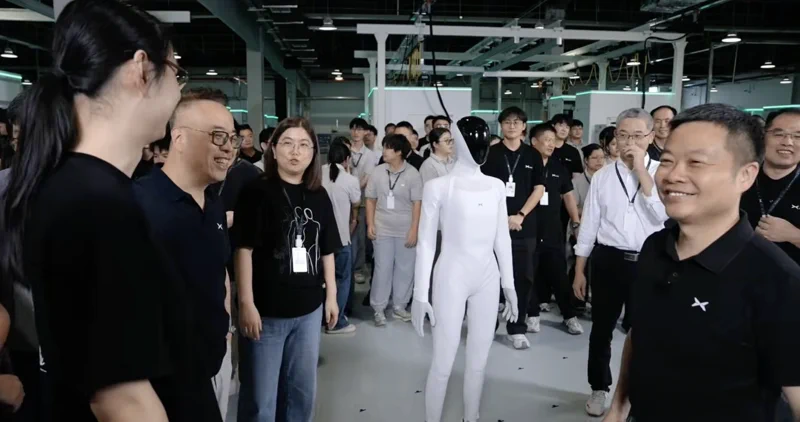
In a move that suggests the future isn’t just coming—it’s being mass-produced next to the family saloon—XPENG Robotics has officially flipped the switch on what it claims is the world’s first automated production line for general-purpose humanoid robots. The first graduate of this high-tech finishing school didn’t just roll off the line; it quite literally walked off under its own steam. No champagne, no grand ceremony—just the rhythmic whir of servos announcing a new era of manufacturing.
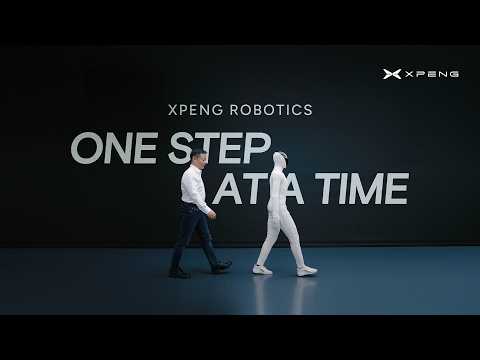
This isn’t some niche lab experiment; it’s a massive statement of intent from the robotics arm of Chinese EV powerhouse XPENG. The company is betting that its hard-won expertise in automotive mass production—a world defined by brutal efficiency and unforgiving supply chains—can be ported directly into the burgeoning field of humanoid robotics. The footage released by the firm shows a crisp, monochrome bot taking its maiden steps on the factory floor, cheered on by a huddle of understandably chuffed engineers.
Of course, let’s keep our circuits from overheating for a moment. A robot walking in a straight line on a level factory floor is a light-year away from it performing dynamic, useful tasks in the chaotic unpredictability of the real world. The most daunting hurdles remain firmly in the realm of software, AI, and the sheer difficulty of getting an automaton to interact with a world designed for humans. Heavyweights like Tesla’s Optimus and Figure’s 01 are currently scaling the same monumental software mountain.
Why does this matter?
The real story here isn’t actually the robot itself—it’s the production line. While rivals are busy hand-crafting bespoke, almost artisanal prototypes in labs, XPENG is building the factory to build the factory-builders. By applying automotive-grade manufacturing principles, they are signalling a strategic push to solve the problems of scale and cost from day one. If XPENG can bring the economics of car manufacturing to the world of humanoids, they could dramatically lower the barrier to entry and accelerate adoption across the board. The robot may be taking baby steps, but the factory is making a giant leap.