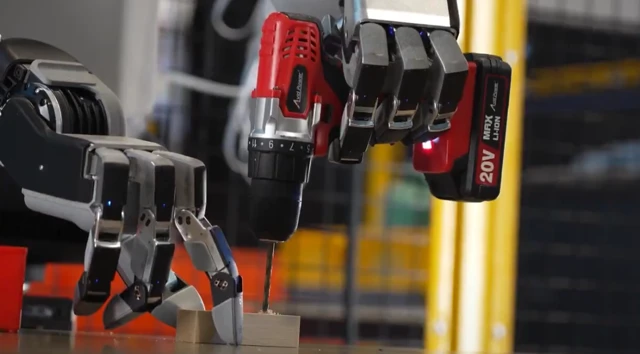
Boston Dynamics has just pulled the wraps off the new hands for its all-electric Atlas humanoid, and they’re a masterclass in balancing raw power with AI-ready precision. While the new grippers boast a whopping 13 degrees of freedom—a massive leap from the seven seen in the previous generation—the most intriguing detail is the finger that didn’t make the cut.
The new hands are engineered for what Boston Dynamics calls “real work”, capable of wielding power tools with a tripodal grasp or executing a delicate pinch grip. As detailed in the company’s official blog post, the entire system is tailor-made for high-fidelity simulation—a critical component for training the robot via reinforcement learning (RL) and finally closing that pesky “sim-to-real” gap. This isn’t just a bespoke lab toy; it’s been designed with mass manufacturing firmly in mind.
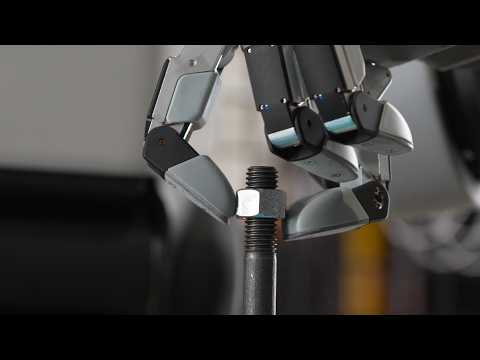
So, about that missing finger. In a move of inspired, if slightly eccentric, management, Boston Dynamics CTO Zack Jackowski tasked his team with taping their pinky and ring fingers together for an entire day. The mission? To see which tasks actually became impossible. The verdict was clear: the pinky simply wasn’t worth the extra weight, power drain, or the mechanical headache of three additional actuators. It’s a refreshingly pragmatic approach in a field that often obsesses over perfect anthropomorphism at the expense of utility.
The decision was later backed up by Alberto Rodriguez, Director of Robot Behaviour for Atlas, who highlighted the constant tug-of-war between dexterity, strength, and sheer ruggedness.
Why does this matter?
This upgrade is far more than just a new set of digits. It signals Boston Dynamics’ serious pivot from being a viral video sensation to a company building a viable, scalable workforce. The focus on backdrivable, proprioceptive actuators means Atlas can now “feel” forces and react gracefully to impacts—a non-negotiable requirement for any robot working in the unpredictable chaos of a human environment. By deliberately sacrificing a pinky in favour of simplicity and durability, Boston Dynamics is making a clear statement: the future of humanoid robotics will be built on cold-blooded engineering, not just on mimicking the human form for the sake of it.