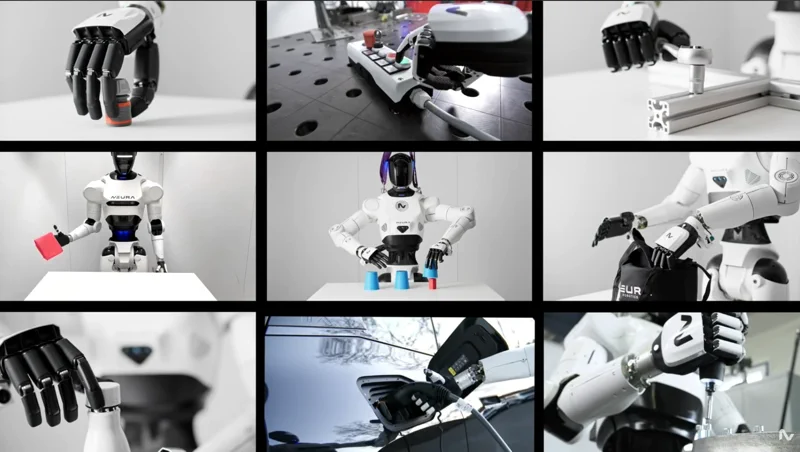
In a move that puts Metzingen—a German town more famous for designer outlets than deep learning—firmly on the high-tech map, Neura Robotics has pulled the curtains back on Neuron AI. The company isn’t being shy about its ambitions, either, branding it the “world’s leading and only multimodal foundation model” for Physical AI. It’s a bold claim, backed by a staggering £1.1 billion ($1.4 billion) war chest, as Neura bets everything on having built the definitive “brain” for the robotic age.
“An intelligent robot needs a brain that brings its senses together and remembers what happened,” says David Reger, Founder and CEO of Neura Robotics. With Neuron AI, the company reckons it has delivered exactly that.
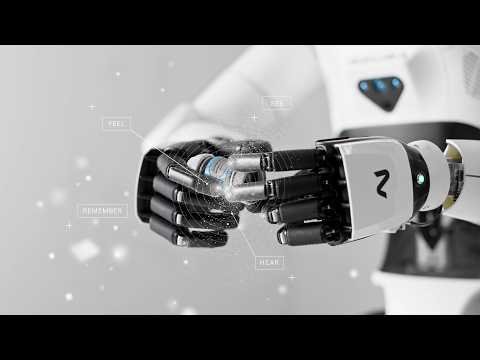
At its heart, Neuron AI is what’s known as a Perception-Language-Action (PLA) model. In plain English, that means it doesn’t just “see” its surroundings; it truly experiences them. The model blends data from 3D vision, tactile sensors, audio, and its own internal telemetry into one seamless understanding of the world. Neura’s argument is simple: vision alone is for amateurs. A truly useful robot needs to feel when a screw catches or hear the distinct click of a component snapping into place—the kind of subtle cues that a camera simply can’t pick up.
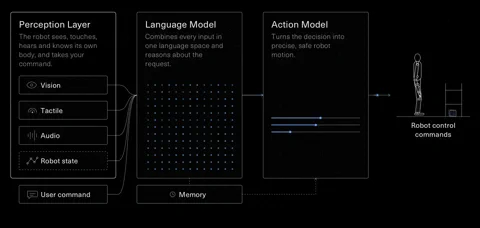
This synthetic mind is being sharpened in what the company calls “NEURA Gyms.” Here, robots put in the hours, practising real-world tasks and learning from humans wearing sensor-laden suits. Crucially, the model includes a memory layer that gives it a sense of object permanence—the fundamental understanding that something hasn’t ceased to exist just because it’s moved out of sight. This allows the AI to tackle complex, multi-stage jobs without losing the plot halfway through.
Why does this matter?
Neura Robotics isn’t just showing off a clever piece of software; this is a massive platform play. By designing Neuron AI to operate across its five different robot “bodies” and opening it up for customer fine-tuning via the Neuraverse platform, the company is positioning itself as the “Intel Inside” for the entire robotics industry. It’s a direct challenge to the “walled garden” approach of competitors who build bespoke AI that only works with their own proprietary hardware.
With backing from industry titans like Amazon, NVIDIA, and Qualcomm, Neura has the financial muscle to make this vision a reality. The aim is to slash “time-to-skill”—the speed at which a robot masters a new trick—allowing customers to roll out new capabilities across entire fleets in an instant. While others are building single-purpose machines, Neura is betting that a universal, multimodal brain is the key to finally making physical AI scale.