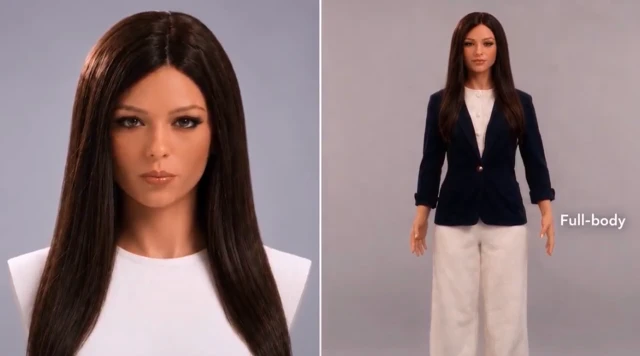
Realbotix Corp., a veteran in the realm of hyper-realistic humanoids, has pulled back the curtain on Echo—a new breed of AI-driven robots crafted for social companionship, education, and wellness. With pre-orders now open for a 2027 debut, the company is pitching Echo as the premium antidote to the “global loneliness epidemic.”
The Echo range arrives in two distinct tiers, with price tags to match. For those happy with a stationary sidekick, the desktop version starts at £9,500. However, if you’re looking for a full-body companion, you’ll need to part with roughly £47,500. And if you want your robot to actually recognise you across a crowded room, the “Vinci” vision system—an optional extra for facial recognition—tacks on another £19,800. All told, you’re looking at a bill of about £67,000 for a robotic friend that genuinely remembers your chats and quirks.
Realbotix claims Echo boasts “uncannily lifelike” facial expressions, fully customisable personalities, and a polyglot brain supporting over 100 languages. The initial rollout, slated for the latter half of 2027, is strictly limited: just 225 desktop units and a vanishingly small run of 25 full-body models. In a refreshingly honest (or perhaps cautious) disclaimer, Realbotix notes that some of its promotional imagery is AI-generated, meaning the final product might not look quite as airbrushed as its digital headshots. The company has confirmed it will be showing off the Echo line in the flesh at CES 2027 in Las Vegas.
Why does this matter?
Realbotix is making a strategic—and highly calculated—pivot. The company is attempting to move away from its controversial origins in adult-oriented robotics towards the more palatable, high-growth market of social and service humanoids. While the price point is eye-watering for the average consumer, it’s actually quite aggressive compared to institutional rivals like Engineered Arts’ Ameca, which can set organisations back upwards of £200,000.
By eyeing up sectors like elderly care, emotional support, and rehabilitation, Realbotix is betting that a physical presence can provide a level of connection that a mere screen-based assistant never could. This tiny initial production run suggests a “toe-in-the-water” approach to gauge whether the public is ready for this level of intimacy. The tech world will be watching closely to see if a brand famous for dancing on the edge of the uncanny valley can successfully rebrand as a purveyor of wholesome, high-tech companionship.