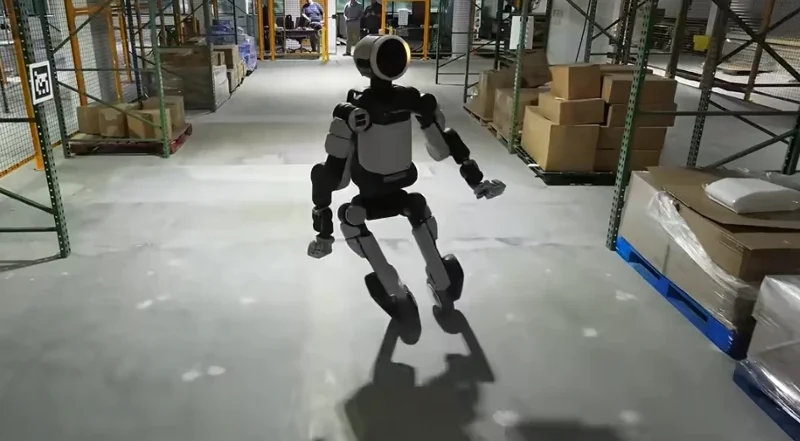
Just when you thought Boston Dynamics’ Atlas had finally mastered the art of staying upright, the company has gone and bolted a pair of off-the-shelf scooter wheels to its ankles. But before you start picturing a dystopian future of robotic roller derby, take a breath—this isn’t a pivot to a new product line. It’s a bit of high-tech brutalism designed to push the humanoid’s actuators to their absolute breaking point.
In a fresh video and blog post, the Hyundai-owned outfit makes it clear that this wheeled setup is strictly a “research testbed.” According to Atlas controls engineer Andy Woo, the mission is to see how the robot’s motors and its whole-body reinforcement learning (RL) controller play together when things get properly stressful. The experiment blends old-school motor controls with an advanced RL policy honed over millions of simulation runs. This “sim-to-real” leap has produced some jaw-dropping results, including a 360-degree spinning jump inspired by human motion capture that apparently “worked on the first try.” The AI even taught itself how to use the wheels to drift through side-dash manoeuvres—a trick its two-legged counterpart couldn’t dream of pulling off.
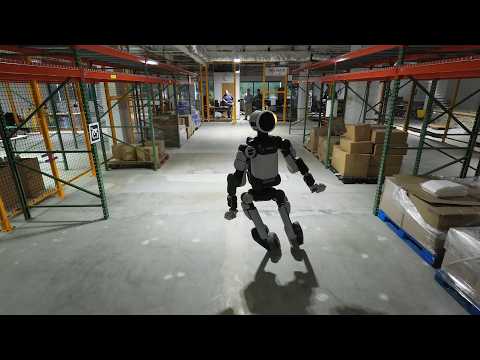
The hardware tweak was surprisingly low-fi, requiring just a single custom adapter to fix the wheels in place. For Woo, the project has clearly been a labour of love. “I haven’t touched my gaming rig the whole time I’ve been working on this because it’s just much more fun,” he admitted in the video.
Why does this matter?
This experiment isn’t really about building a roller-skating robot; it’s about building resilience for when things inevitably go pear-shaped. By intentionally red-lining the hardware, Boston Dynamics is harvesting vital data on actuator limits and “failure modes”—the technical term for when things break. As Woo points out, the next step is seeing how reinforcement learning can cook up “emergent behaviours” to compensate when those parts fail. It’s the unglamorous, essential graft needed to move humanoids out of the sterile lab and into the chaotic real world, ensuring they can keep functioning even when a component packs up. The wheels are just a chaotic, data-heavy shortcut to a much more robust finish line.