A global consortium of researchers, including a powerhouse team from Hungary’s Óbuda University, is taking a sledgehammer to one of the biggest roadblocks in medical robotics: the chronic shortage of high-quality, large-scale data. Their solution? Open-H-Embodiment, a massive, open-source dataset designed to give surgical robots a “collective memory” and fast-track the era of autonomous operations. This isn’t just a library; it’s a bid to do for surgical robotics what ImageNet did for computer vision—providing the foundational fuel for a new generation of AI.

The sheer scale of the project marks a radical departure from the status quo. Where previous datasets were often limited to a few hours of footage from a single machine, Open-H-Embodiment boasts approximately 780 hours of synchronised video and kinematic data. Sourced from nearly 50 institutions worldwide, the collection spans 20 different robotic platforms, including the industry-standard da Vinci Surgical System by Intuitive Surgical, Inc. Key Hungarian experts from Óbuda University’s Antal Bejczy Centre for Intelligent Robotics—including Eszter Lukács, Tamás Haidegger, and Kristóf Takács—are among the lead authors, cementing their role in this global breakthrough. For those wanting to poke around under the bonnet, the entire dataset and documentation are live on the project’s GitHub repository.
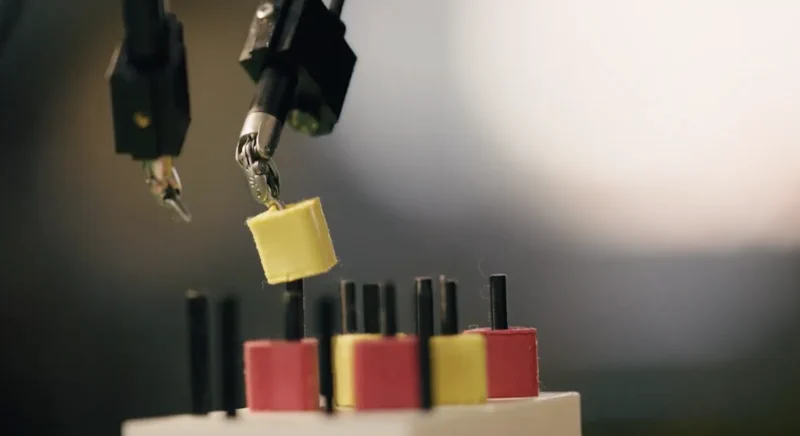
This standardised goldmine is already bearing fruit, as outlined in the research paper, “Open-H-Embodiment: A Large-Scale Dataset for Enabling Foundation Models in Medical Robotics”. The data is currently being used to train heavy-hitting foundation models like GR00T-H, a Vision-Language-Action (VLA) model tailored for the operating theatre, and the Cosmos-H-Surgical-Simulator, a “world model” capable of generating eerily realistic simulations. It is worth noting, however, that we aren’t at Grey’s Anatomy levels of drama just yet; this is strictly pre-clinical work, focusing on laboratory tasks like suturing and peg transfers on phantoms and ex vivo tissue rather than live patients.
Why does this matter?
For years, the dream of autonomous surgery has been stifled by “data silos.” Research labs and manufacturers have traditionally hoarded their proprietary data, making it impossible to train the kind of “generalist” AI that can operate across different hardware. Open-H-Embodiment smashes those silos, creating a public, common foundation.
By democratising access, the project allows smaller labs to punch well above their weight against corporate giants, fostering a collaborative ecosystem where everyone builds on the same knowledge base. The end goal isn’t to hand the scalpel over to a machine and hope for the best, but to develop hyper-competent robotic assistants. These systems could soon handle the “grunt work” of surgery—tedious sub-tasks that cause surgeon fatigue—ultimately sharpening precision and, most importantly, improving patient outcomes.