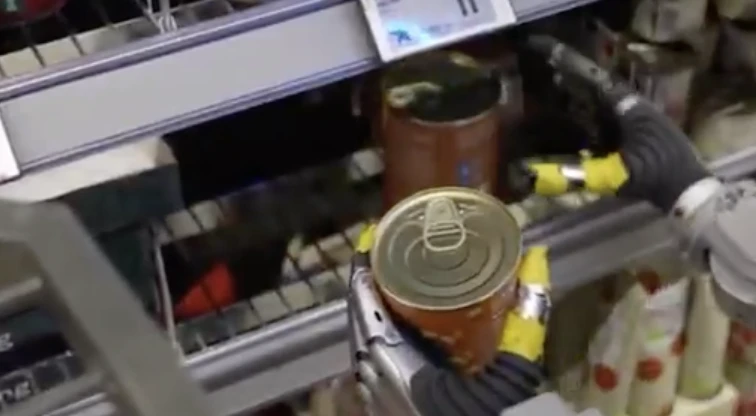
HIVE Robots and the Danish supermarket giant føtex—a crown jewel of the Salling Group—are currently putting humanoid robots through their paces, testing whether they can handle the graveyard shift of shelf replenishment. Since announcing the tie-up in March, HIVE has begun showcasing live trials within supermarket aisles, alongside the launch of a 2027 launch-partner programme. It seems the midnight shelf-stacking shift is fast becoming the go-to proving ground for robotics, though for now, there’s still very much a human in the loop.
The initial pilot leverages humanoid hardware from Unitree, with human operators essentially “teaching” the machines the ropes of product handling. HIVE’s current retail offering is a clever cocktail of AI, remote “robot-pilots”, and their proprietary Heimdall control and data platform. Interestingly, retailers aren’t buying the hardware outright; instead, they’re booking operating hours in a “Robot-as-a-Service” model that covers the machine, the pilots, maintenance, and analytics. While the concept is clear, HIVE is keeping its cards close to its chest regarding hourly pricing.
The roadmap here is refreshingly grounded, eschewing the usual “instant autonomy” hype. The first phase of operation relies on a 1:1 ratio of robot to teleoperator. This will eventually scale to three robots managed by two operators, with the ultimate goal of a single human overseeing a small fleet as the AI learns to shoulder the heavy lifting. According to HIVE and føtex’s partnership announcement, these trials are strictly after-hours affairs, taking place in the controlled environment of a closed store. It’s a pragmatic, staged deployment with adult supervision, rather than a fleet of autonomous droids gone rogue in the frozen peas aisle.
Why does this matter?
Let’s face it: supermarket shelves were designed for humans, not hydraulics. Products come in every conceivable shape and size, and those bottom shelves are a literal pain in the back, no matter how sleek the robot looks. HIVE is betting that a humanoid form factor can navigate this legacy environment without requiring a total store redesign, theoretically freeing up human staff to actually talk to customers.
The real litmus test won’t be the “cool factor,” but whether the cost-per-case of replenishment—including the remote human pilots—actually stacks up against traditional labour. The 2027 partner programme signals a clear path toward wider adoption, but the jury is still out on whether the economics and full autonomy will be ready for the weekly shop.