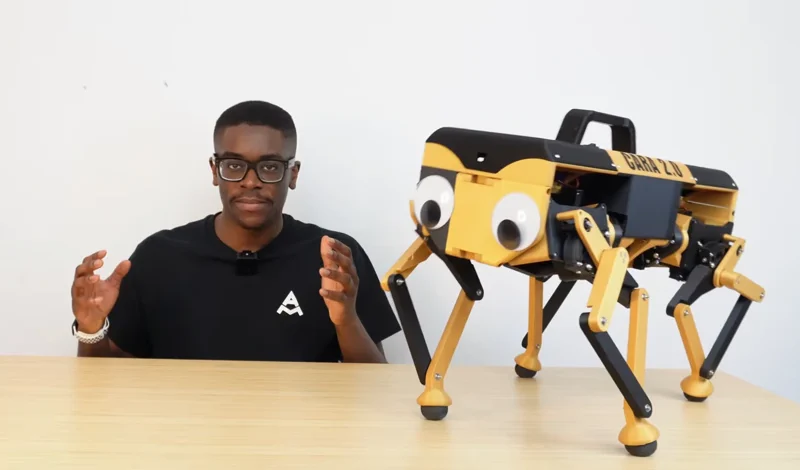
Maker and YouTuber Aaed Musa is back with an update to his unique rope-driven robot dog, and the numbers are impressive. The new CARA 2.0, the result of a senior engineering design project, manages to slash the cost of its predecessor by over half, dropping from $3,000 to a more palatable $1,450. It also shed significant weight, slimming down 42% from 14.25 kg to a lean 8.26 kg. This is the successor to the original CARA: The Rope-Driven Robot Dog Revolution that first caught our eye with its clever, low-backlash capstan drives.
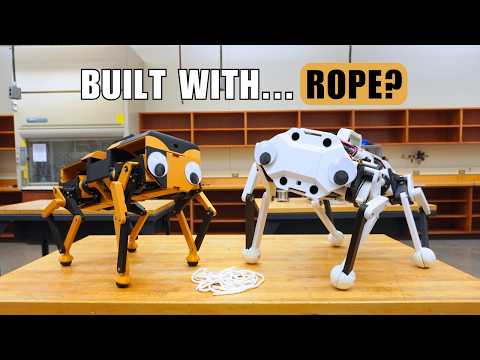
Developed with a team as a capstone university project, CARA 2.0 boasts a walking speed of 0.55 m/s and can haul a 6.8 kg payload for about an hour. The team’s ambitious goal was to hit a sub-$1,000 price point, and while they didn’t quite make it, a final cost of $1,450 for a dynamic quadruped at the hobbyist level is nothing to scoff at. The cost savings were achieved by swapping expensive carbon fiber tubes for 3D-printed structures and sourcing cheaper drone motors—which the team had to manually rewind to triple their torque output.
Why is this important?
Here’s the twist: despite the project’s success, Musa is officially retiring the very technology that gave the robot its name. CARA stands for “Capstans Are Really Awesome,” but after this build, Musa has concluded they are, in fact, awesome but deeply impractical. In his project wrap-up, he states he’s retiring the design and won’t be using capstan drives in the future, lamenting that they “just aren’t very assembly-friendly.”
This is a classic engineering lesson learned in the trenches. A design can be brilliant on paper—offering zero backlash and high performance—but if it’s a nightmare to build and maintain, it’s a dead end for practical applications. Musa notes that for his next quadruped, he’ll be “using off-the-shelf actuators.” It’s a pragmatic, if slightly heartbreaking, conclusion to a project that successfully made a better, cheaper robot dog, only to reveal the foundational tech was a beautiful-but-flawed premise. You can read all the technical details on Musa’s project page.